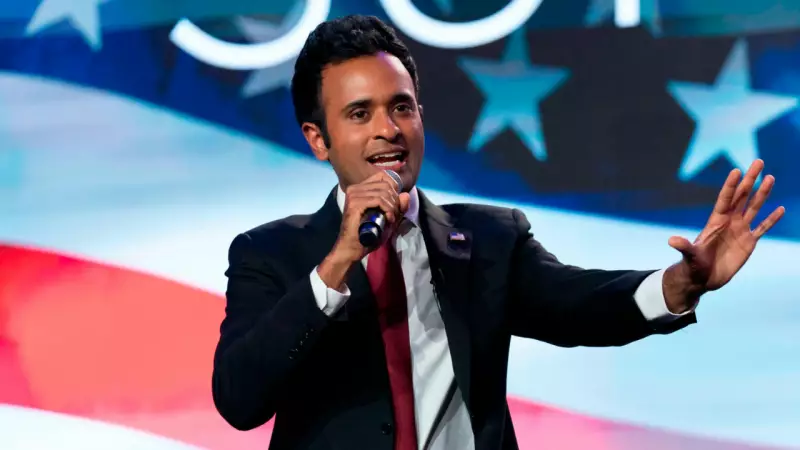
Vivek Ramaswamy, the Indian-American entrepreneur and former presidential candidate, has ignited a political controversy in his campaign for Ohio governor. His central promise to "put money back in the pockets of American citizens" to address the state's affordability crisis is being sharply contrasted with his personal wealth, estimated by Forbes at over $1.8 billion.
Campaign Rhetoric vs. Personal Fortune
Ramaswamy, who has secured the Ohio Republican Party's endorsement and the backing of former US President Donald Trump, frames his campaign as a battle against bureaucratic bloat. "Ohio needs to stop feeding the beast," he declared, criticizing an "overgrown" bureaucracy. He claims his travels reveal no American, left or right, desires more red tape, but many want less. His solution is to cut government spending and return those funds to citizens, a message central to his bid against Democratic candidate Amy Acton, who holds a slight lead in polls, and GOP primary rival Casey Putsch.
However, this populist economic message is facing intense scrutiny given Ramaswamy's billionaire status. Critics on social media and political opponents question how a individual with such vast personal resources can authentically relate to the everyday financial struggles of Ohio residents.

Past Financial Decisions Under the Microscope
The scrutiny extends beyond his current net worth. Opponents have unearthed details from Ramaswamy's past, highlighting that in 2011, he received a $90,000 fellowship from the Paul & Daisy Soros Fellowship for New Americans to support his graduate law studies at Yale University. This fact has sparked debate, as public records show he also reported an income of roughly $2.25 million that same year from his work as an investment analyst.
Many are questioning why someone with such high earnings was awarded a fellowship typically aimed at supporting individuals with greater financial need, suggesting there were less privileged candidates available at the time.
Business Record and Allegations
Further controversy surrounds Ramaswamy's business ventures, particularly his leadership of biotech firm Axovant Sciences, founded in 2014. The company acquired a failed Alzheimer's drug, took it public with great fanfare, and later saw its share price collapse dramatically. This sequence led some financial observers to label the move a pump-and-dump scheme, alleging it funneled money to early investors and Ramaswamy himself at the expense of later shareholders.
While Ramaswamy's campaign has vehemently denied any wrongdoing and defends his business record as legitimate, the episode continues to be a point of attack for his critics, who use it to challenge his credibility as a steward of public trust and economic policy.
The Ohio governor's race is shaping up to be a heated contest where Ramaswamy's substantial wealth and complex financial history are becoming central themes, testing the appeal of his anti-establishment, pro-affordability message.