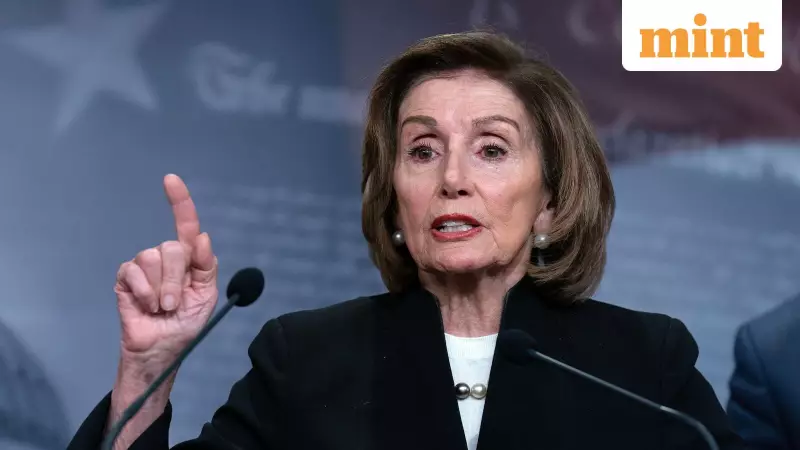
US Republican Congresswoman Anna Paulina Luna has launched a scathing attack against former House Speaker Nancy Pelosi, making explosive allegations of insider trading. Luna cited data suggesting Pelosi's stock investments have yielded astronomical returns of approximately 17,000%, a figure that vastly outpaces even legendary investor Warren Buffett's performance.
The Core Allegations and Staggering Returns
In a recent social media post, Representative Anna Paulina Luna, a Republican from Florida, brought the issue of congressional stock trading back into the spotlight. She directly accused Nancy Pelosi, a prominent Democratic figure, of engaging in insider trading. The central piece of evidence presented was the claimed return on Pelosi's investment portfolio.
Luna stated that Pelosi's stock investments have generated returns close to 17,000%. To put this mind-boggling number into perspective, she compared it to the investment performance of Warren Buffett's Berkshire Hathaway, which has seen an increase of roughly 4,000% since 1965. This comparison implies that Pelosi's financial gains in the stock market are more than four times greater than those achieved by one of the world's most celebrated investors over a much longer period.

Context: The Ongoing Debate on Congressional Stock Trades
These allegations are not made in a vacuum. They tap into a long-simmering and bipartisan public concern about members of the US Congress trading individual stocks. Critics argue that sitting lawmakers have access to non-public, sensitive information that can influence markets. This privileged position, they contend, creates a high potential for conflicts of interest and unfair advantage.
Nancy Pelosi, who served as the Speaker of the House of Representatives, has historically been one of the most active stock traders among members of Congress. Her trades, often executed by her financier husband Paul Pelosi, have been frequently scrutinized. While Pelosi has defended the activity as lawful and transparent, the sheer scale of the reported profits fuels arguments for stricter regulations or an outright ban on such trades by sitting legislators.
The issue gained enough traction that in 2022, a bill was introduced to ban members of Congress, their spouses, and dependent children from trading stocks. Notably, Nancy Pelosi initially resisted calls for a ban but later shifted her position, stating she would support it if the broader Congress did.
Political Repercussions and Public Sentiment
Anna Paulina Luna's public accusation adds a sharp partisan edge to the ethical debate. By naming Pelosi and highlighting the extraordinary 17,000% figure, Luna is clearly aiming to frame the issue as one of Democratic privilege and corruption. This move is likely to resonate with her political base and amplify calls for accountability.
The public's trust in Congress is often low, and stories of lawmakers making millions through stock trades while crafting legislation that affects those same companies can be deeply damaging. This latest allegation, with its eye-popping percentage, is perfectly crafted for viral outrage on social media and in conservative news outlets.
It also places pressure on other lawmakers to take a definitive stand. The narrative of "elected officials getting rich on inside information" is a potent one, regardless of party affiliation. While Pelosi is the target today, the controversy underscores a systemic issue that could ensnare any active trader in Congress.
What Happens Next?
As of now, Anna Paulina Luna's claims are public allegations made on social media. They have not been accompanied by a formal ethics complaint or charges from financial regulators like the Securities and Exchange Commission (SEC). Proving insider trading is legally complex and requires evidence of willful trading based on material, non-public information.
However, the political consequences are immediate. The story fuels the ongoing legislative push to ban stock trading for members of Congress. It also serves as a rallying cry for government transparency advocates. For Nancy Pelosi, it represents another chapter in the long-running scrutiny of her family's finances, potentially affecting her public legacy.

The core facts remain: a US Congresswoman has publicly accused a former House Speaker of achieving near-mythical stock market returns suggestive of insider trading. Whether these allegations lead to formal investigations or remain a political weapon, they have successfully reignited a critical debate about ethics, privilege, and the intersection of public service and private wealth in Washington D.C.