In a striking example of digital foreshadowing, an old social media post from a relatively unknown user is now making waves for seemingly predicting a major geopolitical event. A user on X, formerly known as Twitter, named Aravind posted a detailed forecast in 2025 that appears to align closely with the recent US military action against Venezuelan President Nicolás Maduro.
The Tweet That Went Viral Years Later
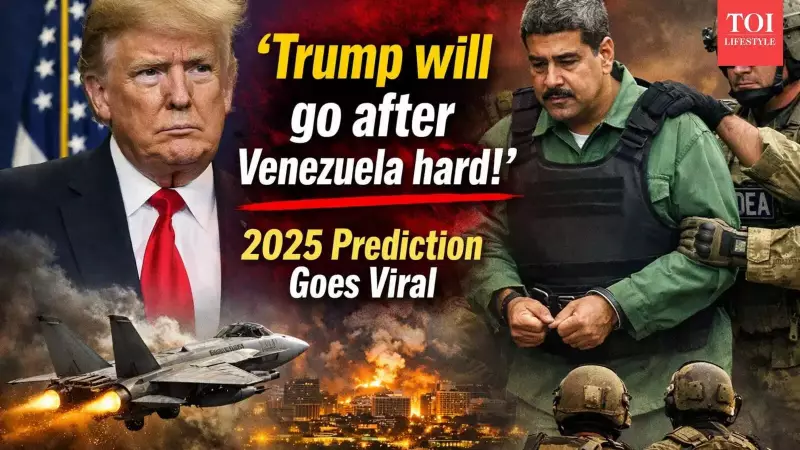
Back on April 02, 2025, Aravind shared a prediction that many dismissed at the time as mere speculation. He wrote, “I can predict once the Russia-Ukraine peace deal is done, Trump will go after Venezuela hard with sanctions and try take out Maduro. If everything fails, a false flag and direct bombing-invasion will happen. Why will the US do it? The answer is below for you. Gn (sic).” The tweet received mixed reactions, with some bookmarking it as an interesting theory while others ignored it among the flood of online commentary.
Real-World Events Mirror the Online Forecast
Fast forward to January 3, 2026, and the world witnessed a dramatic development. The United States launched a surprise military operation in Venezuela, targeting areas in and around the capital, Caracas. Elite US forces successfully captured President Nicolás Maduro and his wife, transporting them out of the country. US President Donald Trump and his senior aides publicly justified the raid as a decisive strike against alleged narco-terrorism and corruption, announcing that Maduro would face charges in US courts.

In a significant policy shift, President Trump also indicated that the United States would temporarily oversee governance in Venezuela to ensure a stable transition of power. This move marks a substantial departure from previous US approaches to the South American nation, which has been mired in economic and political crisis for years.
What the Prediction Got Right and Wrong
Aravind's commentary has gained renewed relevance for several prescient elements. He correctly forecasted that President Trump would escalate pressure on Venezuela's leadership, culminating in direct military action. His mention of a potential military intervention if other measures failed also aligns with the events that unfolded.
However, not every detail from the prediction has materialized. As of now, there is no confirmed evidence that a “false flag” event triggered the operation. Furthermore, the legality and justification of the US action remain hotly debated topics among international law experts and policy analysts worldwide.
The Bigger Picture: Social Media and Geopolitics
The resurfacing of this tweet is more than just a quirky internet moment. It highlights a fascinating trend in today's volatile global landscape, where online forecasts from niche accounts can sometimes precede real-world events. This phenomenon raises important questions about the role of social platforms in shaping public perception and whether some users are uniquely tuned into broader geopolitical undercurrents.
Just as online communities recently linked a scene from the TV show 'Jack Ryan' to Maduro's capture, they are quick to draw connections between pop culture, social media predictions, and political reality. Whether Aravind's tweet was a genuine, insightful forecast or a remarkably coincidental hit, its resurgence underscores the unpredictable intersection between digital commentary and real-world power dynamics.
What Happens Next for Venezuela?
With the Trump administration now projected to play a long-term role in Venezuela's transition—potentially including control over governance and the country's vast oil infrastructure—the global community is watching closely. Critics argue this approach raises serious questions about national sovereignty and international law. Supporters, however, contend it could finally bring stability to a nation that has suffered immensely.
As events continue to develop, one thing is clear: in the age of instant information, the line between online speculation and geopolitical reality is becoming increasingly blurred.