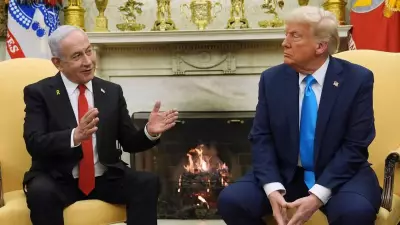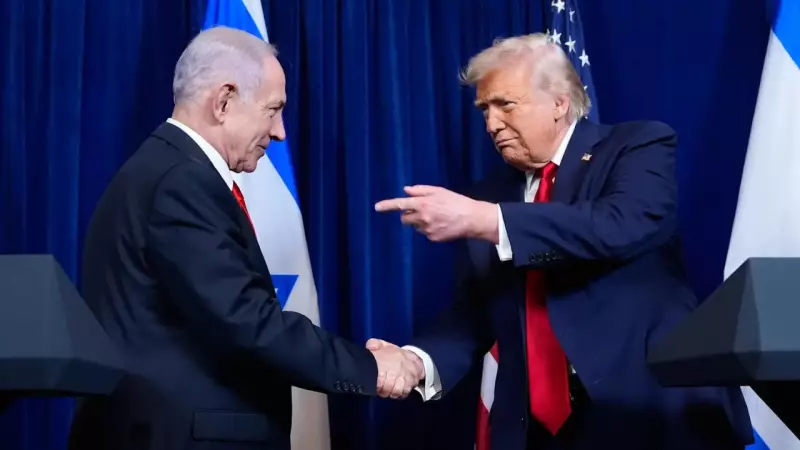
For almost five decades, unwavering support for Israel stood as a near-theological pillar for the American political right. This consensus seamlessly united evangelical Christians, Cold War strategists, neoconservatives, and major Republican donors into a powerful, rarely questioned alliance. Donald Trump's first presidency seemed to cement this bond's ultimate victory, marked by the recognition of Jerusalem as Israel's capital, the signing of the historic Abraham Accords, and a close, public friendship with Prime Minister Benjamin Netanyahu.
However, as Trump enters a second term, this long-held certainty is showing deep cracks. The shift is not driven by Trump himself, who remains a staunch supporter of Israel. The fracture stems from the evolving movement that surrounds him, which is no longer ideologically unified on this critical issue. Support for Israel has become the litmus test exposing MAGA's internal divisions—generational, theological, ideological, and, in alarming instances, veering into disturbingly antisemitic territory.
The Unraveling of a Historic Bargain
To grasp the current rupture, one must understand the foundation of the original alliance. The modern Republican commitment to Israel was never solely about strategy; it was deeply theological. From the late 1970s, evangelical Christians, particularly those following premillennial dispensationalism, began viewing the modern state of Israel as a key player in a divine prophecy. Israel's survival and growth were seen as signs of biblical timelines moving toward a climax. Backing Israel was thus an act of faith, not just foreign policy.

This belief system aligned perfectly with the geopolitics of the Cold War, where Israel was portrayed as a democratic bulwark against Soviet-influenced Arab states. By the Reagan era, the coalition of the Christian Right, neoconservatives, and pro-Israel lobbying groups had solidified into unshakeable Republican doctrine. Questioning support for Israel became a political taboo within the party. Trump inherited this robust structure and amplified it for his own purposes, effectively weaponizing the existing pro-Israel consensus.
The New MAGA Revolt: Generational Shift and Online Radicalization
The core change today is not in Trump's position but in the very composition of the MAGA base. The Republican Party that emerged post-2016 absorbed a wave of younger voters who are more online, more conspiratorial, and less connected to the moral frameworks of the Cold War or the Holocaust. For many, anti-establishment anger, not religious conviction, was the entry point. Their interpretation of "America First" does not automatically translate into reflexive support for Israel.
Recent surveys and focus groups reveal a sharp generational split. While older GOP voters remain overwhelmingly pro-Israel, newer MAGA-aligned voters are far more skeptical and sometimes openly hostile. Their objections often start with pragmatic foreign policy: questioning billions in aid abroad while America faces inflation, immigration challenges, and perceived cultural decline at home.
Yet, the line between isolationism and antisemitism is increasingly blurred. Online MAGA ecosystems frequently circulate conspiracy theories about Jewish global power, Israel's alleged control over Washington, and shadowy financial networks. Rhetoric once confined to the fringe white nationalist right is now bleeding into broader conservative discourse.
A Media Civil War and Theological Rewriting
This ideological drift has erupted into an open media war on the right. Figures like Tucker Carlson have become influential mainstream critics of Israel, attacking Christian Zionism as a theological corruption that manipulates Americans into sacrificing national interest for a foreign state. His critiques, framed as intellectual nationalism, uncomfortably overlap with older antisemitic ideas.

At the harder edge, voices like Nick Fuentes promote explicitly antisemitic worldviews, treating Israel and Jews as civilizational enemies. While still toxic to the Republican establishment, his ideas circulate freely online, seeping into broader MAGA conversations through euphemism and irony. On the opposing side, commentators like Ben Shapiro defend Israel as both a moral ally and strategic necessity. These clashes have turned Israel into a loyalty test within conservative media.
Beneath the political battles lies a quieter, more profound shift: theology. Younger conservative Christians are moving away from dispensationalist readings that placed Israel at the centre of God's plan. Some are gravitating toward postmillennial or Christian nationalist views that see America, not Israel, as the primary chosen project. Others are turning toward Catholicism, which lacks evangelical Zionism's end-times focus. The result is a worldview where Israel is no longer sacred, and in some interpretations, Judaism itself is framed as obsolete—a dangerous theological shift with a long, ugly history in Christian Europe.
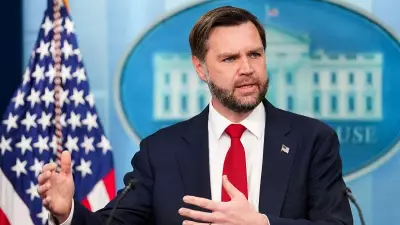
Trump has observed this fracture with characteristic pragmatism. He continues to back Israel unequivocally and defend its military actions. Yet, he has shown little interest in disciplining the anti-Israel or antisemitic elements within his coalition. His likely political heir, JD Vance, has been notably noncommittal, avoiding clear statements that might alienate either camp. This ambiguity is strategic; MAGA is now a coalition held together more by shared resentment than coherent ideology, and Israel is where those resentments collide.
Why This Split Matters for America's Future
The divide over Israel reveals a larger truth about MAGA's trajectory. For decades, Republican foreign policy was anchored by a stable, if sometimes simplistic, moral clarity. That clarity has vanished, replaced by a volatile mix of isolationism, online radicalization, theological revisionism, and generational fatigue with inherited causes.
Israel is not just another policy debate for MAGA. It is the test case for whether the movement evolves into a disciplined nationalist project or drifts further into conspiratorial populism. It also raises a darker question about who and what is permitted within the MAGA tent. While Trump dominates the present, the fight over Israel signals that the post-Trump right will be far less predictable, far less coherent, and far more willing to dismantle alliances once considered eternal.