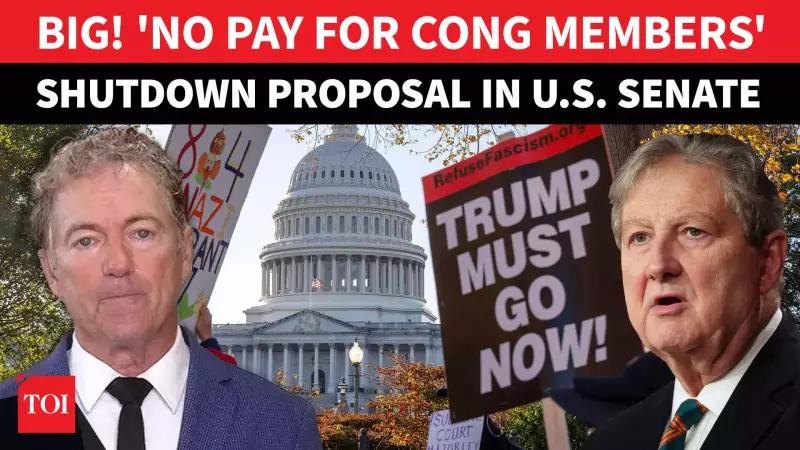
Senator Kennedy's Bold Move: No Pay for Congress During Shutdowns
In a significant development that has ignited political debate across the United States, Senator John Kennedy has proposed groundbreaking legislation that would require members of Congress to forfeit their pay during government shutdowns. The bill, introduced on November 7, 2025, aims to create stronger accountability measures for lawmakers during federal funding crises.
The Core Proposal and Constitutional Considerations
Senator Kennedy's legislation contains a straightforward but powerful provision: lawmakers would not receive their salaries during government shutdowns and would only be eligible for back pay after the government reopens. This move directly addresses the frustration many Americans feel when federal services halt while congressional pay continues uninterrupted.
The Louisiana senator proactively addressed potential constitutional concerns surrounding his proposal, specifically citing the 27th Amendment which prevents any law that changes the compensation for members of Congress from taking effect until after the next election. Kennedy insists his bill has been carefully crafted to comply with all legal requirements while still achieving its accountability objectives.

Mixed Reactions and Political Debate
The proposal has generated strong reactions across the political spectrum, creating unusual alliances and divisions. Supporters have praised the bill as a long-overdue measure that would ensure lawmakers face the same financial uncertainties that affect millions of Americans during government shutdowns.
Critics, however, have raised questions about potential constitutional conflicts and whether the measure might create unintended consequences in legislative negotiations. Some opponents argue that the threat of lost pay might force lawmakers to accept poor compromise legislation rather than standing firm on principle.
Kennedy has emphasized that his primary goal is to align lawmakers' incentives with the public interest during federal shutdowns. By ensuring that members of Congress experience direct financial consequences when they fail to keep the government operational, the senator believes his bill would create stronger motivation for timely budget resolutions.
Broader Implications for Government Accountability
The debate surrounding Kennedy's proposal touches on fundamental questions about political accountability and fiscal responsibility. Government shutdowns have become increasingly common in recent years, often resulting from partisan gridlock over budget negotiations and policy priorities.
This legislation represents one of the most direct attempts to ensure that lawmakers bear personal financial responsibility for their inability to reach consensus. The concept has resonated with many Americans who believe that public servants should share in the hardships created by government dysfunction.
As the discussion continues to evolve, political analysts are watching closely to see whether Kennedy's bill gains traction in Congress or becomes a symbolic statement about legislative accountability. The proposal has already succeeded in bringing renewed attention to the mechanisms of government funding and the personal responsibilities of elected officials during fiscal crises.