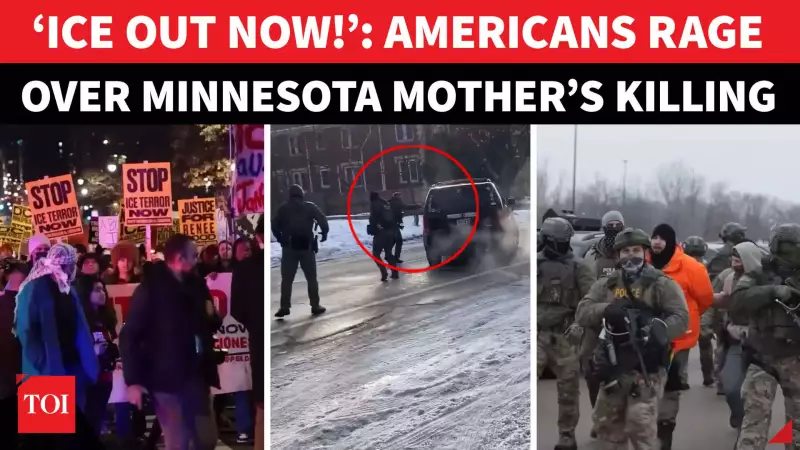
The fatal shooting of a 37-year-old American woman by an agent of the Immigration and Customs Enforcement (ICE) in Minneapolis has plunged the United States into a fresh wave of protests and a heated national debate. The incident, which resulted in the death of Renee Nicole Good, has seen demonstrations erupt from the streets of Minnesota to outside the White House in Washington DC and New York City.
Video Evidence Fuels Public Outrage
The controversy ignited after a video of the encounter spread rapidly online. The footage shows ICE agents surrounding Good's vehicle in Minneapolis moments before gunfire erupted. While federal officials have staunchly defended the agent's actions, labeling the shooting as justified, this official narrative has been fiercely contested by state leaders and a growing number of protesters.
Minnesota Governor Tim Walz publicly confronted the federal administration over the incident and took the significant step of activating the National Guard to manage the escalating public anger within the state. The response highlights the deep divide between state and federal perspectives on the use of force.

Protests Spread from Coast to Coast
The fallout was immediate and widespread. Angry crowds gathered in major cities, demanding justice for Renee Nicole Good and calling for an end to what they describe as unchecked and aggressive federal enforcement. Chants and placards outside the White House and in New York City reflected a nation grappling with questions of accountability and power.
In a related and tense development, Portland's Mayor made headlines by reportedly ordering Trump's ICE agents to leave the city following two new casualties. This local defiance against federal authority underscores the volatile political climate the shooting has exacerbated.
FBI Investigation and a Nation Divided
With tensions at a boiling point, the Federal Bureau of Investigation (FBI) has taken over the probe into the shooting. This move places the case at the center of a national examination of law enforcement protocols. The core question splitting the country remains whether the agent's actions constituted lawful force in the line of duty or a lethal overreach of federal authority.
The incident has also reverberated in the political arena. Figures like California Governor Gavin Newsom have launched scathing critiques, framing the administration's approach as a "carnival of chaos." As the FBI continues its investigation, the United States finds itself once again deeply divided on issues of justice, enforcement, and the limits of governmental power.