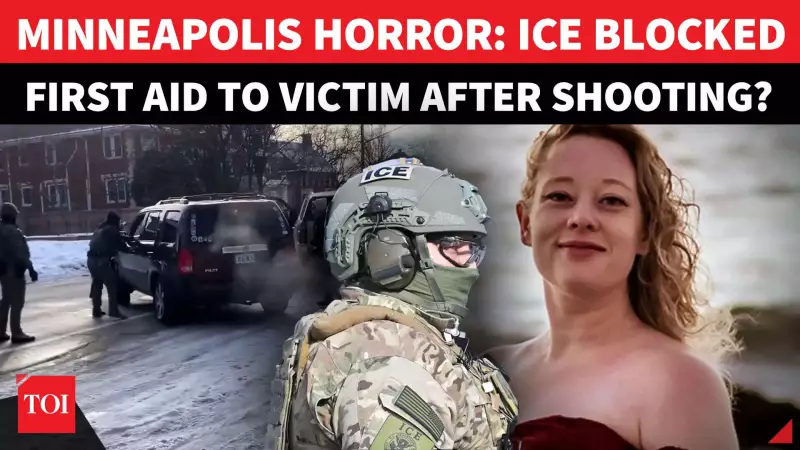
A deeply disturbing incident in Minneapolis has ignited a firestorm of national anger and protests after a video surfaced showing an Immigration and Customs Enforcement (ICE) agent fatally shooting a woman and then callously blocking medical professionals from assisting her.
The Chilling Incident and Blocked Medical Aid
The event, which occurred in Minneapolis, resulted in the death of 37-year-old Renee Nicole Good. During what authorities describe as an immigration enforcement operation, an ICE agent shot Good. The most harrowing part of the footage, which has gone viral, shows a medical professional attempting to reach the wounded woman to provide critical aid.
In a moment that has become the focal point of public fury, the ICE agent is seen and heard preventing the doctor from helping. When the medical expert insists on offering assistance, the agent responds with the now-infamous phrase, "I don't care". This explicit obstruction of potential life-saving aid has compounded the tragedy and raised severe questions about protocol and humanity.

Official Response and Mounting Public Anger
Federal authorities have defended the officer's actions, stating the shooting was an act of self-defense. However, this explanation has done little to quell the rising tide of criticism. Leaders at the city and state level are demanding full transparency and answers, putting pressure on federal agencies to conduct a thorough and impartial investigation.
In contrast to the official stance, the public reaction has been swift and powerful. The city of Minneapolis has seen vigils grow and protests intensify, with demonstrators expressing grief over Good's death and anger at the agent's conduct. Reports indicate that ICE vehicles have been attacked amid the escalating tensions.
A National Flashpoint for Debate
The death of Renee Nicole Good has rapidly transformed into a national flashpoint, fueling the already heated debates surrounding immigration enforcement practices, police accountability, and the use of force. The graphic video evidence has provided a visceral catalyst for discussions on the limits of authority and the duty to preserve life, even during enforcement actions.
As the community mourns and protests continue to spread, the incident underscores the deep divisions and high stakes involved in U.S. immigration policy. The calls for justice and systemic reform are growing louder, turning this Minneapolis shooting into a symbol of a much broader national conflict.