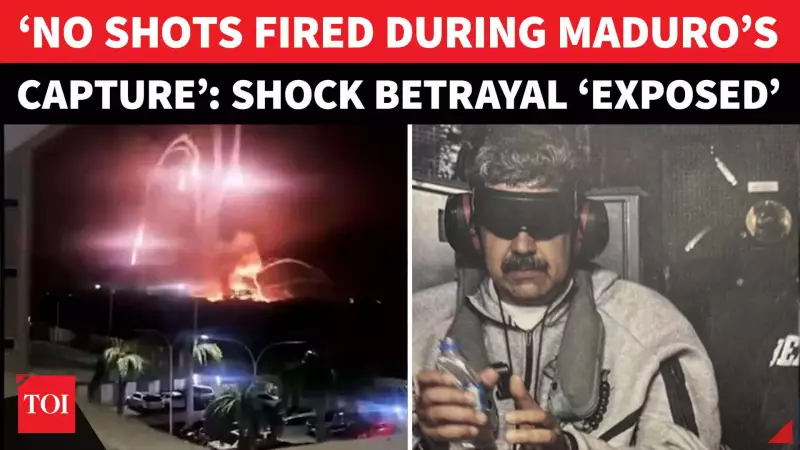
The dramatic and seemingly bloodless seizure of Venezuela's President, Nicolás Maduro, by United States forces has left the world grappling with more questions than answers. The event, which occurred without the expected military confrontation, has sparked intense speculation about the methods used in the high-stakes operation.
The Puzzling Silence of Venezuela's Defences
For years, the Venezuelan government under Maduro had warned of potential foreign intervention, boasting of its military readiness. However, on January 6, 2026, when the operation to take the president into U.S. custody was executed, there was a conspicuous absence of conflict. No air defence systems were activated, no fighter jets were scrambled to intercept, and no significant resistance was reported from loyalist forces on the ground.
This complete lack of a defensive response has become the central mystery of the entire episode. Observers and analysts expected a fierce battle, but instead, the transfer of the Venezuelan leader appeared to happen with startling ease. The vacuum of official information from both Washington and Caracas has only deepened the intrigue, allowing rumours and theories to flourish online and in diplomatic circles.

The 'Trojan Horse' Theory Gains Traction
In the absence of concrete facts, an unverified but compelling narrative has begun to circulate. Dubbed the 'Trojan Horse' theory, it suggests that the capture was achieved not through overt force, but via a sophisticated campaign of deception. The theory posits that operatives may have used subterfuge or insider cooperation to secure Maduro without triggering a large-scale military response.
This hypothesis attempts to explain the perplexing silence from Venezuela's substantial military apparatus. If true, it would represent a covert operation of significant complexity, bypassing traditional warfare tactics. Until clear evidence emerges from US or Venezuelan officials, this theory remains speculative, but it highlights the extraordinary and puzzling nature of the president's detention.
Reactions and the Unfolding Fallout
The aftermath of the capture has sent shockwaves through Venezuela and the international community. Maduro's family and allies have reacted with fury. In a related development, his wife was seen with visible bruises during a court hearing, though the circumstances remain unclear. His son has publicly denounced what he calls 'traitors' within the country.
Internationally, the event has escalated tensions. Reports indicate that leaders from China and Iran have issued strong warnings to the US, viewing the action as a dangerous precedent. The situation remains highly volatile, with the threat of further intervention and economic repercussions, particularly concerning Venezuela's crucial oil reserves, hanging over the region.
The capture of Nicolás Maduro stands as one of the most enigmatic political events in recent memory. The unanswered question of how it was accomplished so quietly continues to shape the narrative of the Venezuela crisis, proving that sometimes the method of a political earthquake can be as destabilizing as the event itself.