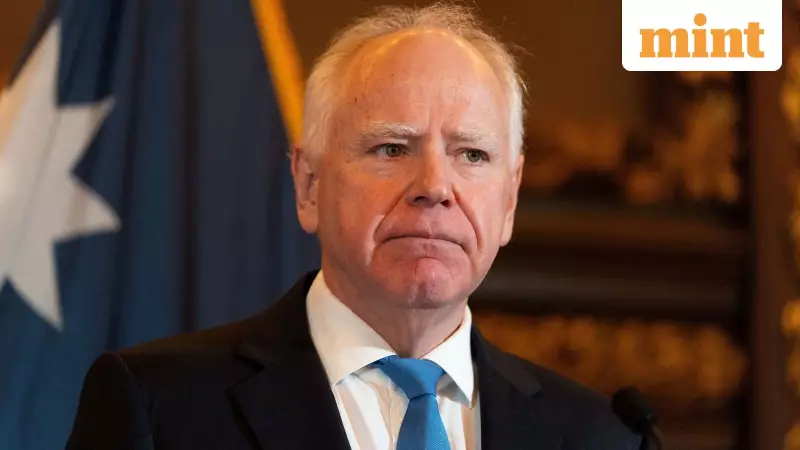
In a significant political development, Minnesota Governor Tim Walz, who was the Democratic vice-presidential nominee in the 2024 election, declared on Monday, January 5, that he will not be seeking a third term in office. The announcement comes at a time when the governor faces mounting scrutiny from former President Donald Trump and his supporters regarding a state investigation into child care program fraud.
Walz Points to Political Pressure from Trump Camp
Governor Walz explicitly identified the sustained attacks and federal pressure orchestrated by Donald Trump as a central factor in his decision to step aside. "Donald Trump and his allies — in Washington, in St. Paul, and online — want to make our state a colder, meaner place," Walz stated. He accused them of trying to poison the social fabric by targeting neighbours and ultimately dismantling what makes Minnesota an ideal place for families.
Walz elaborated that his focus must remain on serving the people of Minnesota rather than defending his political future. "Every minute that I spend defending my own political interest would be a minute I can’t spend defending the people of Minnesota against the criminals who prey on our generosity and the cynics who want to prey on our differences," he explained. His decision allows him to concentrate on his remaining year in office while others contest the election.

The governor highlighted specific actions from the Trump administration, including the withholding of federal funds for critical child care programs and the use of inflammatory rhetoric against Somali immigrants in Minnesota, as part of a coordinated pressure campaign.
Political Repercussions and the 2026 Race
Walz's withdrawal dramatically alters the landscape for the 2026 gubernatorial contest in this Democratic-leaning state. Nationally, Democrats currently control 24 out of 50 governorships, with 36 seats, including Minnesota's, scheduled for election next year.
On the Democratic side, speculation is rife that Senator Amy Klobuchar may consider entering the race, though she has not made any final decision public.
The Republican field is already crowded, with around a dozen candidates announcing their campaigns. Notable declared candidates include:
- Mike Lindell, the MyPillow CEO and a prominent election denier and Trump ally.
- Minnesota House Speaker Lisa Demuth.
- Former state senator Dr. Scott Jensen.
- State Representative Kristin Robbins.
- Former GOP Chair David Hann.
- Former executive Kendall Qualls.
- Defence lawyer and former federal prosecutor Chris Madel.
Legacy of a Two-Term Governor and Unfinished Goals
A military veteran, former educator, and staunch union supporter, Governor Walz has been recognised for pursuing an ambitious Democratic agenda during his two terms. His administration successfully enacted several major reforms, such as:
- Strong protections for abortion rights.
- Paid family and medical leave for workers.
- Provision of free school meals for students.
- Access to gender-affirming care for transgender youth.
- Legalisation of recreational marijuana.
Walz gained national attention during the COVID-19 pandemic for using emergency powers to close schools and businesses, a move that sparked significant pushback from Republican legislators. In his second term, bolstered by Democratic majorities in both state legislative chambers and a record budget surplus, he advanced an even more progressive policy platform.
However, his tenure also faced challenges. Walz recently expressed deep frustration over his inability to pass new gun control measures following a tragic mass shooting at Annunciation School in Minneapolis in August last year, which resulted in the deaths of two children and injuries to dozens. He had hoped to convene a special session to advance gun safety proposals, but the effort stalled.
Walz's national profile was significantly elevated when he was selected as Vice President Kamala Harris's running mate in the 2024 presidential election, cementing his role as a key figure in the Democratic Party.