The world's attention was gripped over the weekend as the United States launched military strikes on Venezuela and announced the capture of its President, Nicolás Maduro, and his wife. The dramatic escalation, which occurred on Saturday, 3 January, sent shockwaves through international diplomacy and became the lead story for news organisations across the globe. However, the prominence and framing of this major event varied significantly from one media outlet to another.
Military Action and a Presidential Capture
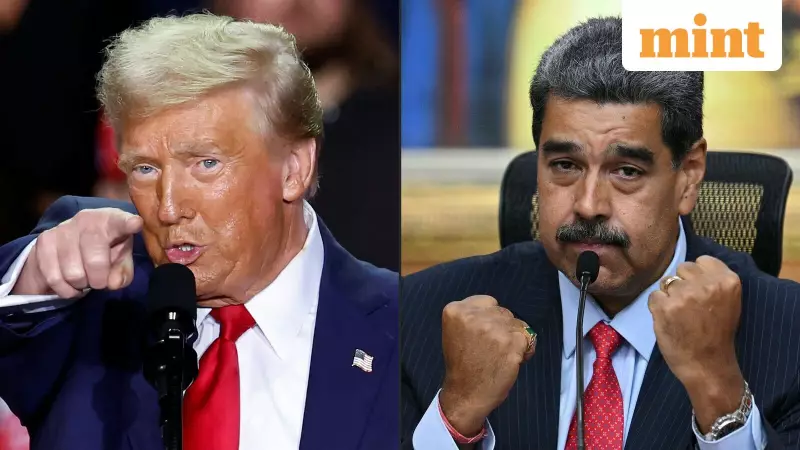
According to an official statement from the Venezuelan government, the US carried out strikes on multiple targets, including the capital Caracas, and the states of Miranda, Aragua, and La Guaira. The operation culminated in the capture of President Nicolás Maduro, a move personally announced by US President Donald Trump. This unprecedented action instantly became the defining international news story, pushing other conflicts and developments to the sidelines in many newsrooms.
A Tale of Two Headlines: Western Media's Dominant Play
Prominent Western media outlets gave the story blanket, top-tier coverage. The BBC treated it as a major breaking international event, placing it at the very top of its homepage with a "LIVE" tag to indicate real-time updates. The UK-based broadcaster supplemented its main report with explainers and a reporter's firsthand account describing explosions and aircraft over Caracas.

Similarly, CNN's homepage was dominated by a bold and assertive headline: "US strikes Venezuela and captures Maduro." The American network linked to related articles, including one highlighting US Attorney General William Barr's statement that Maduro would face the "full wrath" of American justice on US soil. Both BBC and CNN employed direct, factual language, using terms like "strike" and "capture" to describe the developments.
Other major Western agencies like Reuters and Bloomberg also placed the story front and center on their homepages, dedicating prime digital real estate to the unfolding crisis. The Guardian provided extensive coverage with time-stamped updates, reporting on the Venezuelan vice-president's demand for immediate 'proof of life' of Maduro and his wife, alongside statements from President Trump.
Diverse Perspectives and Editorial Choices
Not all global media presented the story with the same singular focus. Al Jazeera, the Middle East's largest news network, reported the breaking news but maintained a more diverse homepage. Alongside updates on Venezuela, it featured continuing coverage of Gaza, the Russia-Israel conflict, and developments in Palestine, reflecting its editorial priorities and longstanding focus on these regions.
This contrast in presentation underscores how editorial judgment, geographic location, and target audience influence news hierarchy. While Western media framed the US attack on Venezuela as the day's paramount story, other outlets balanced it against other ongoing global crises.
The event marks a severe intensification of the long-standing political conflict between the US and Venezuela. The physical capture of a sitting head of state by another nation is a rare and extreme measure in modern geopolitics, setting a complex precedent. The global media's split-screen on this story—between wall-to-wall coverage and more measured placement—highlights not just the facts of the attack, but the varied lenses through which the world perceives power and conflict.