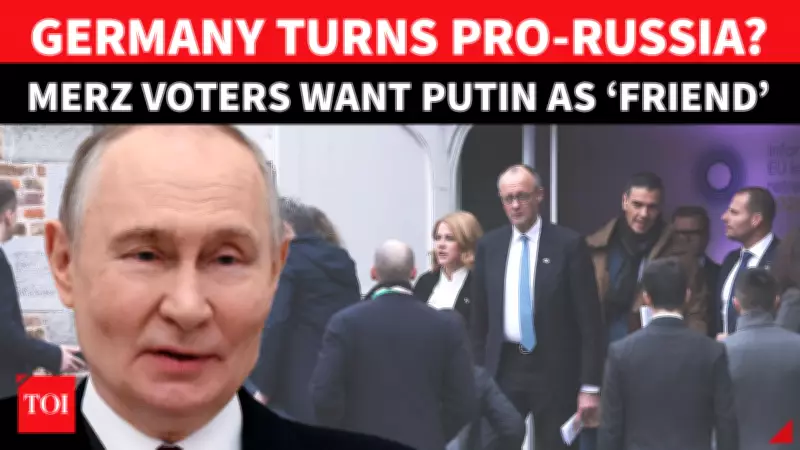
German Public Urges Chancellor Merz to "Call Putin Now" Amid Ukraine War Stalemate
A significant majority of German citizens are now advocating for Chancellor Friedrich Merz to initiate immediate and direct diplomatic talks with Russian President Vladimir Putin in an effort to resolve the ongoing Ukraine war, according to a revealing new national poll. The survey, conducted by YouGov, indicates a substantial shift in public opinion as the conflict continues to impact Germany's economy and energy security.
Poll Reveals Strong Support for Negotiations
The comprehensive YouGov poll, released recently, shows that nearly 58% of German respondents support the idea of Chancellor Merz engaging in direct bilateral negotiations with President Putin. This sentiment is particularly pronounced among voters from Merz's own conservative political base, suggesting growing pressure from within his traditional support network.
Despite this clear public mandate for diplomatic engagement, Chancellor Merz has maintained a cautious and skeptical stance regarding restarting direct dialogue with Moscow. The German leader has emphasized that any negotiations should not be conducted in isolation but rather as part of broader trilateral discussions involving Russia, the United States, and Ukraine simultaneously.

Opposition Leaders Amplify Calls for Action
Meanwhile, opposition political figures in Germany are intensifying their demands for the Berlin government to "call Moscow" without further delay. These leaders are issuing stark warnings about the potential consequences of continued diplomatic inaction, highlighting concerns about Germany's economic decline and accelerating deindustrialization process.
The country continues to grapple with persistently high energy prices and economic stagnation, conditions that many analysts attribute directly to the ongoing geopolitical tensions and sanctions related to the Ukraine conflict. This economic pressure appears to be driving the increased public appetite for diplomatic solutions.
Broader Geopolitical Context
The poll results emerge against a complex backdrop of European security concerns and shifting international alliances. Germany's position as a key European Union member and major economic power places it at the center of diplomatic efforts to resolve the Ukraine crisis, even as other global powers navigate their own relationships with Russia.
The growing German public support for direct talks represents a notable development in European attitudes toward conflict resolution, potentially signaling a willingness among citizens to explore diplomatic avenues even amid ongoing hostilities. This sentiment could influence not only Germany's foreign policy approach but also broader European Union strategy regarding the protracted conflict.
As Chancellor Merz balances domestic political pressure with international diplomatic considerations, the poll results suggest that German voters are increasingly prioritizing economic stability and energy security alongside traditional security concerns, creating a complex policy landscape for the Berlin government in the coming months.