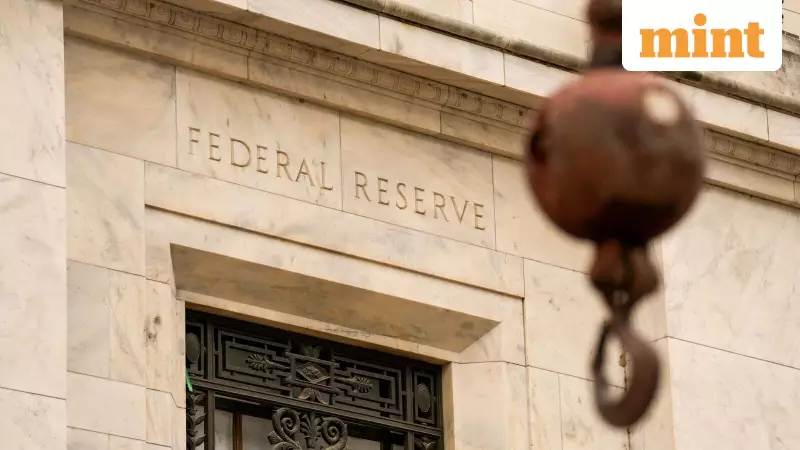
The US Federal Reserve has signalled a cautious approach to further interest rate reductions in the early part of 2026, according to the minutes from its December policy meeting released this week. The document reveals deepening internal divisions among officials, with some advocating for holding rates steady "for some time" despite recent cuts aimed at supporting a cooling labour market.
Internal Divisions and a "Finely Balanced" Decision
The minutes from the December meeting, where the Fed cut its benchmark rate by a quarter point, show that the decision was not unanimous. While most policymakers supported the cut, which was the third in a row following reductions in September and October 2025, several expressed significant reservations. Some officials described their support as "finely balanced," stating they could have just as easily voted to keep rates unchanged. Others outright opposed the December cut, concerned that progress on bringing inflation down to the central bank's 2% target had stalled this year.
The dissent was formal, with the vote drawing three opposing voices: two from officials who were against any cut, and one from an official aligned with former President Donald Trump who favoured a larger reduction. This underscores the challenging environment the Fed navigates, balancing the risks of persistent inflation against signs of economic softening.

The Inflation vs. Growth Tightrope
The core of the Fed's caution lies in conflicting economic signals. On one hand, the labour market has shown fragility, with the unemployment rate rising to 4.6% in 2025, prompting the initial series of rate cuts. On the other hand, inflation has proven more stubborn than desired, and strong consumer spending helped fuel a robust 4.3% annualised growth rate in the third quarter of 2025.
Officials noted that price increases have been more persistent than anticipated, making each successive rate cut a closer call. Recent data showing inflation cooling to 2.7% in November has been viewed with scepticism by economists, who warn that methodological disruptions from a recent government shutdown may have made the figures appear milder than reality.
With the policy rate now in a range of 3.5% to 3.75%—its lowest level in three years—a vocal group within the Fed is wary of lowering it further while inflation remains above target. The central bank appears to be entering a fine-tuning phase.
What Lies Ahead for the US Economy and Markets?
The path forward for monetary policy remains highly data-dependent. The minutes explicitly noted that some officials believe it would be appropriate to maintain the current rate range unchanged for an extended period. This suggests a high bar for approving another cut at the upcoming meeting on January 27-28, 2026.
According to Matthew Luzzetti, chief US economist at Deutsche Bank, it might take unexpectedly weak data in the upcoming December jobs report (due January 9) to push the Fed toward a fourth consecutive cut. For now, traders in interest-rate futures largely expect the Fed to hold steady in January.
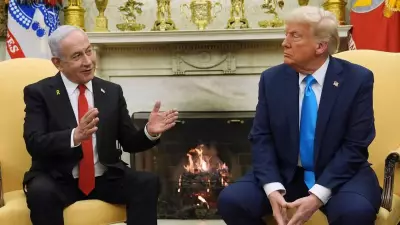
Adding another layer of uncertainty is the impending leadership change at the Fed. Chair Jerome Powell's term ends in May 2026, and former President Trump's search for a successor has drawn scrutiny, particularly over his desire for a candidate aligned with his preference for lower interest rates. This political backdrop will likely influence monetary policy discussions in the coming months.
The Fed's own projections, encapsulated in the "dot plot," show a median expectation of just one more rate cut for all of 2026, though forecasts among the 19 officials vary widely. As former Philadelphia Fed President Patrick Harker analogised, the central bank is proceeding carefully: "You don't know exactly where the destination is, so you don't want to go slamming into the wall."