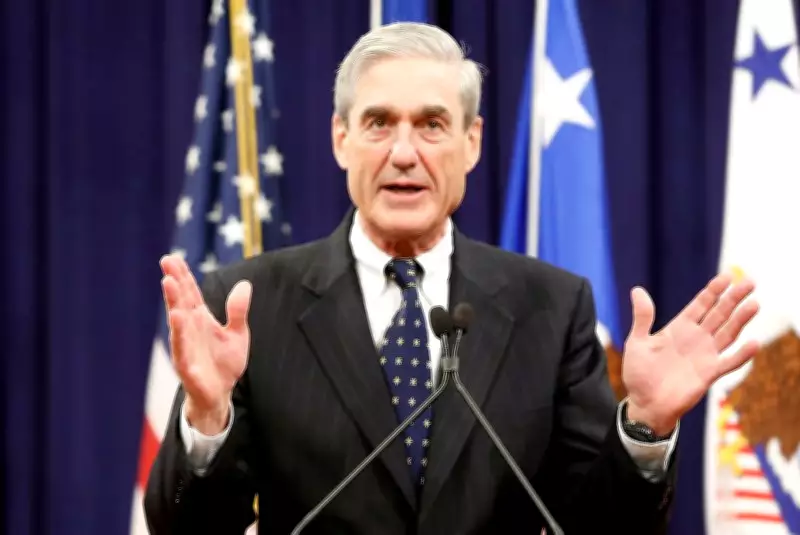
Former FBI Director Robert Mueller, Who Investigated Russia-Trump Ties, Dies at 81
Robert S. Mueller III, the former FBI director who reshaped the agency after the September 11, 2001, attacks and later served as special counsel investigating ties between Russia and Donald Trump's presidential campaign, has died. He was 81 years old.
A Legacy of Public Service and Law Enforcement Transformation
Mueller's family announced his passing in a statement on Saturday, requesting privacy during this difficult time. His career spanned decades, marked by a steadfast commitment to public service and significant contributions to national security.
Appointed as FBI director just one week before the 9/11 attacks, Mueller embarked on a 12-year tenure that fundamentally altered the bureau's focus. He shifted its primary mission from solving domestic crimes to preventing terrorism, a monumental task that required overhauling strategies and resources to meet 21st-century threats.

In response to the cataclysmic events of September 11, Mueller redirected 2,000 out of 5,000 agents from criminal programs to national security efforts. This transformation aimed to preempt terrorist plots, setting an almost impossibly high standard of preventing 99 out of 100 potential attacks.
Despite challenges, including technological upgrades and policy adjustments, Mueller's leadership helped thwart numerous terror plots and secure high-profile criminal cases, such as the prosecution of fraudster Bernie Madoff.
The Trump-Russia Investigation and Its Aftermath
After leaving the FBI in 2013, Mueller returned to public service as special counsel in 2017, tasked with investigating alleged coordination between the Trump campaign and Russia during the 2016 presidential election. His stern demeanor and taciturn approach defined the nearly two-year inquiry, which resulted in criminal charges against six Trump associates.
Mueller's 448-page report, released in April 2019, detailed substantial contacts between the campaign and Russia but did not allege a criminal conspiracy. It highlighted Trump's efforts to influence the investigation, though Mueller declined to make a definitive judgment on obstruction of justice due to department policy against indicting a sitting president.
Controversial Conclusions and Political FalloutThe report's nebulous conclusions sparked debate, with Attorney General William Barr asserting that Trump did not obstruct justice, leading to private disputes between Barr and Mueller. During congressional hearings, Mueller's terse testimony disappointed some Democrats who had hoped for a more decisive impact on impeachment proceedings.
Early Life and Military Service
Born in New York City and raised in a Philadelphia suburb, Mueller was a Princeton graduate and Vietnam War veteran. He served as a Marine officer, earning a Bronze Star, Purple Heart, and two Navy Commendation Medals for his valor. After military service, he earned a law degree from the University of Virginia and pursued a career in federal prosecution.
Mueller's dedication to public service was evident when he left a lucrative private law firm to join the U.S. attorney's office, focusing on homicide cases in Washington, D.C. His meticulous approach to building criminal cases earned him respect throughout his career.
Challenges and Triumphs at the FBI
Mueller's tenure as FBI director was not without obstacles. Issues included controversies over surveillance practices, interrogation policies, and costly technology upgrades. However, his apolitical stance and commitment to legality were highlighted in a 2004 hospital standoff, where he and James Comey resisted Bush administration efforts to reauthorize a warrantless wiretapping program.
In a vote of confidence, Congress approved a two-year extension for Mueller to remain as director under President Barack Obama, recognizing his pivotal role in national security.
Reflections on Terrorism and LegacyMueller often reflected on the weight of his responsibilities, particularly after terrorist attacks like the Boston Marathon bombing and Fort Hood shootings. He expressed deep concern for victims' families and the constant drive to prevent future tragedies.

His death marks the end of an era for American law enforcement, leaving behind a complex legacy of transformation, investigation, and unwavering public service.