California's Submerged Ice-Age World: A 300-Foot Sea Rise That Changed History
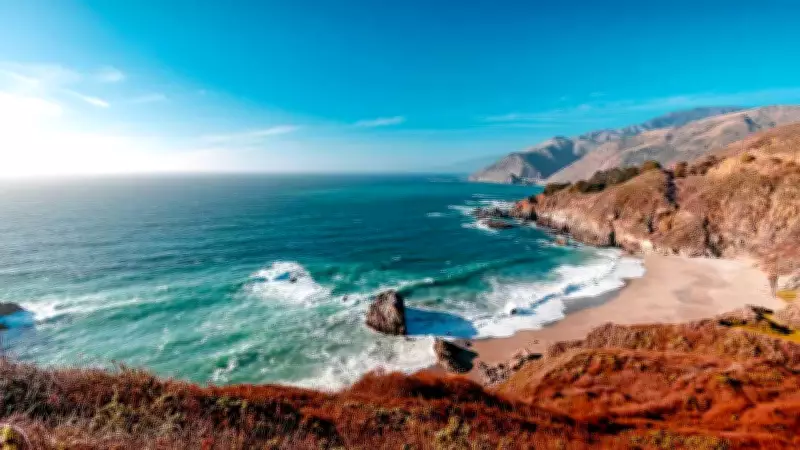
Beneath the shimmering waters of California's iconic coastline lies a prehistoric era, long buried and forgotten, that is now emerging to potentially rewrite our understanding of ice-age history. According to California State Parks, following the last glacial maximum, sea levels surged by an astonishing over 300 feet, inundating ancient landscapes, Indigenous settlement areas, and eventually submerging them beneath the vast Pacific Ocean.
Unearthing a 'Lost Coastal Migration World'
With crucial assistance from the San Diego Archaeological Centre, researchers are actively recovering thousands of submerged stone tools from the ocean floor. These remarkable finds are helping to construct a narrative of a 'lost coastal migration world,' where early human populations once thrived on lands that are now deep underwater. Concurrently, through extensive federal expeditions spearheaded by NOAA Ocean Exploration, there are concerted efforts to meticulously map these drowned valleys to pinpoint prehistoric camping locations and habitation sites.
The discoveries are not limited to human artefacts. They also encompass items over 100,000 years old, including mammoth tusks and the locations of entire submerged villages. This paints a vivid picture of a California during the Ice Age that would be virtually unrecognizable to modern residents. The melting ice caps triggered a catastrophic sea-level rise, flooding vast stretches of land and forever altering the state's geography, leaving countless secrets entombed beneath the sands of the continental shelf.

Signs of Ancient Indigenous Life and the Super-Island Santarosae
Imagine divers descending to depths of approximately 80 feet off the coast of La Jolla, where they retrieve stone tools from the seabed. This is just one instance of the San Diego Archaeological Centre's coastal findings, which include reports of more than 2,000 stone mortars and pestles discovered on the ocean floor. These artefacts serve as tangible proof that areas currently submerged were once bustling sites of Indigenous villages and daily activities for millennia.
During the Ice Age, the Northern Channel Islands were consolidated into one massive landmass known as Santarosae, connected to the mainland by glacial formations. Scientists hypothesize that this super-island functioned as a crucial 'highway' for the first human groups arriving in North America. Utilizing advanced sonar technology, researchers can now visualize the original contours of ancient rivers and forests that characterized this land, mapping the submerged topography to reconstruct the pre-flood landscape.
Megafauna Discoveries and Advanced Sonar Mapping Techniques
The land was also home to several 'megafauna' species, such as the Jefferson's Ground Sloth and mammoths. Fossils of these colossal creatures, including mammoth tusks dated to around 100,000 years old from Santa Rosa Island, are preserved at institutions like the Santa Cruz Museum of Natural History. These fossils illustrate how giant mammals, much like humans, were compelled to migrate due to dramatic climate changes and the encroaching seawater that consumed their ancestral habitats.
According to detailed plans from NOAA, scientists employ side-scan sonar and sub-bottom profiling sonars to map these ancient drowned landscapes. These sophisticated instruments function like large-scale ultrasound machines, transmitting sound waves through the water to the sea floor. They generate high-resolution maps that reveal 'paleolandscapes'—hills, valleys, and riverbeds that existed prior to their submersion, offering an unprecedented window into a world lost to the ocean's depths.