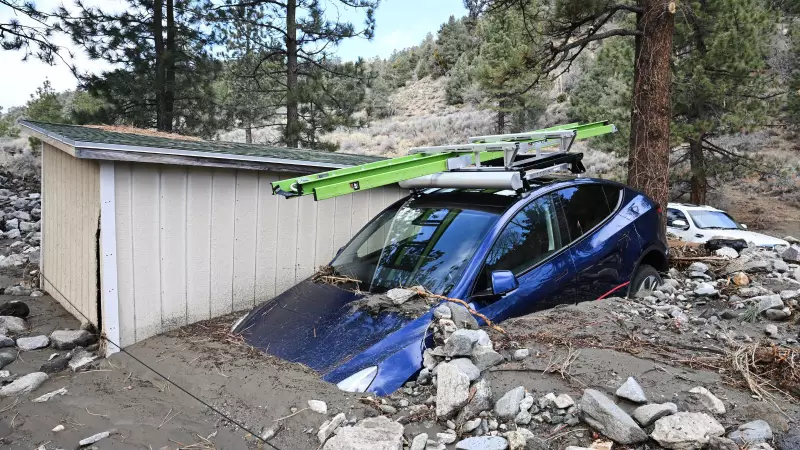
A powerful atmospheric river storm has unleashed chaos across California, triggering deadly mudslides that have buried homes and cars, claimed at least three lives, and severely disrupted air travel. The severe weather event, which began impacting the state on Sunday, has turned streets into raging rivers of mud and debris, particularly devastating the Santa Cruz mountain community of Boulder Creek.
Homes and Vehicles Swept Away in Debris Flow
The town of Boulder Creek in Santa Cruz County bore the brunt of the disaster. Dramatic footage and reports confirm that a massive flow of mud, rocks, and fallen trees cascaded down hillsides, engulfing everything in its path. Several residences and multiple vehicles were completely buried under the thick slurry. Emergency services rushed to the scene, but the scale of the debris made immediate rescue and assessment operations extremely challenging.
Authorities have confirmed at least three storm-related fatalities across the state. One of the deaths occurred in Yuba City, north of Sacramento, where a man was discovered under a fallen redwood tree. Tragically, two other individuals lost their lives in separate incidents where trees fell on vehicles. The relentless rain has saturated the soil, making trees highly unstable and prone to toppling.

Widespread Travel Chaos and Power Outages
The storm's impact extended far beyond the mudslides, crippling transportation networks. At San Francisco International Airport (SFO), approximately 160 flights were cancelled on Sunday, with hundreds more facing delays. The ripple effect of these cancellations was felt nationwide, disrupting travel plans for thousands of passengers. Airlines have been forced to issue waivers for flights in and out of several California airports.
On the roads, conditions remained perilous. A significant stretch of the crucial Highway 101 was forced to close near the small town of Tres Pinos due to severe flooding. Numerous other roads and highways across Northern and Central California were also shut down, stranding motorists and hampering emergency response efforts. Concurrently, powerful winds accompanying the storm knocked down power lines, leaving over 500,000 homes and businesses without electricity at the peak of the outages.
A State on High Alert
This extreme weather is the result of a so-called Pineapple Express atmospheric river, a long, narrow band of moisture pulling warm water vapor from the Pacific near Hawaii directly to the California coast. While such systems are crucial for the state's water supply, they can also lead to catastrophic flooding and landslides, especially in areas scarred by recent wildfires.
Governor Gavin Newsom has declared a state of emergency for eight counties, including Los Angeles, Orange, and Santa Clara, mobilizing state resources to assist local responders. The National Weather Service has issued numerous warnings, urging residents in vulnerable areas to heed evacuation orders and avoid all non-essential travel. As the storm system slowly moves through the region, authorities warn that the threat of further landslides and flooding remains high, with more rain forecast in the coming days.
The scenes from California serve as a stark reminder of the increasing intensity and destructive power of weather events linked to climate patterns. Recovery efforts are expected to be long and costly, as communities begin the arduous task of digging out from under the mud and rebuilding.