UN Chief Antonio Guterres Endorses India as Ideal Host for AI Impact Summit 2026
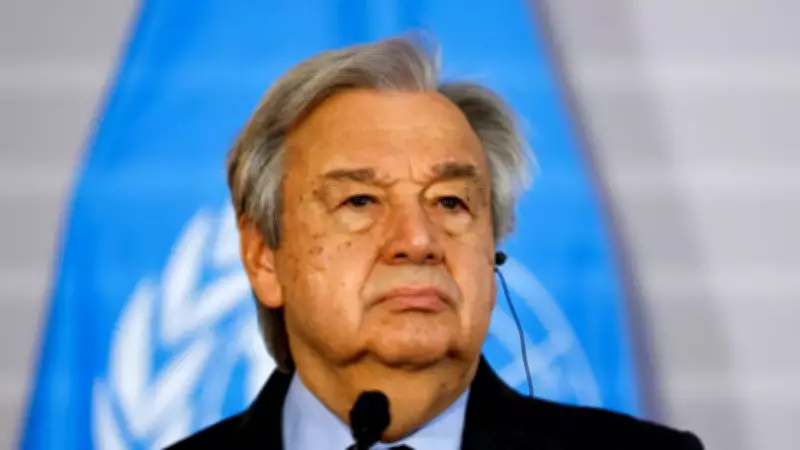
In a significant endorsement, UN Secretary-General Antonio Guterres has publicly backed India as the perfect host for the upcoming AI Impact Summit 2026, set to commence this Sunday. Guterres lauded India's expanding global influence and its robust, successful economy, positioning the nation as a pivotal player in shaping the future of artificial intelligence on the world stage.
First AI Summit in the Global South
The AI Impact Summit 2026, scheduled from February 16 to 20, marks the inaugural event of its kind in the Global South. This landmark gathering will convene world leaders, top technology CEOs, and key policymakers to deliberate on the trajectory of artificial intelligence. The primary objective is to ensure that AI's transformative benefits are equitably distributed across the globe, reaching every corner of humanity.
In an exclusive interview with PTI, Guterres expressed strong support for India's initiative, stating, "I strongly congratulate India for organising this Summit. It's absolutely essential that AI develops itself to the benefit of everybody, everywhere and that countries in the Global South are part of the benefits of AI." He issued a stern warning against AI becoming an exclusive privilege of developed nations or being monopolized by superpowers such as the United States and China. Emphasizing inclusivity, Guterres asserted that AI must function as "a universal instrument for the benefit of humankind."

India's Rising Global Stature
Guterres highlighted India's ascendant role in international affairs, praising its status as a key emerging economy. He pointed to recent developments, including India's trade agreement with the European Union, as positive strides toward fostering genuine global multipolarity. "The role of India, which is today a very successful emerging economy that is having a bigger and bigger role in not only the global economy but in its influence in global affairs, India is the right place to have this Summit and to make sure that AI is being discussed in depth, in all its enormous potential and also in all its risks, but that AI belongs to the whole world and not only to a few," he elaborated.
Further extolling India's position, Guterres added, "I see India in the centre of those emerging economies, and this is something I would be delighted to discuss with Prime Minister Modi because I have a lot of hope for the role that India can play in shaping this multipolar world." He also voiced his "frustration" with the ineffectiveness of the UN Security Council, advocating for fundamental reforms to better reflect contemporary global dynamics, with India poised to play a central role in crafting a multipolar world order.
Guterres cautioned against global power imbalances, stating, "There are two things we need to avoid in the world. We need to avoid the system in which there is total hegemony by only one power or a system in which the world is divided between two superpowers."
Personal Appreciation for India's Heritage
Beyond political and economic accolades, Guterres shared a personal admiration for India, expressing fascination with its rich historical tapestry and profound cultural influence. He mentioned currently reading about India's historical impact across various regions, from China and Southeast Asia to the Mediterranean during the Roman Empire, underscoring the nation's enduring legacy.
Summit Participants and Themes
The AI Impact Summit 2026 will feature an impressive roster of attendees, including:
- French President Emmanuel Macron
- Brazilian President Luiz Inacio Lula da Silva
- Tech leaders such as Google CEO Sundar Pichai, Adobe CEO Shantanu Narayen, and Anthropic CEO Dario Amodei
Additionally, other UN leaders will participate, including Human Rights Commissioner Volker Turk and Technology Envoy Amandeep Singh Gill. The summit will focus on core themes centered around 'People, Planet and Progress', aiming to foster discussions that balance AI's potential with ethical considerations and global equity.