Norway's Prime Minister Questions UN Security Council's WWII-Era Structure
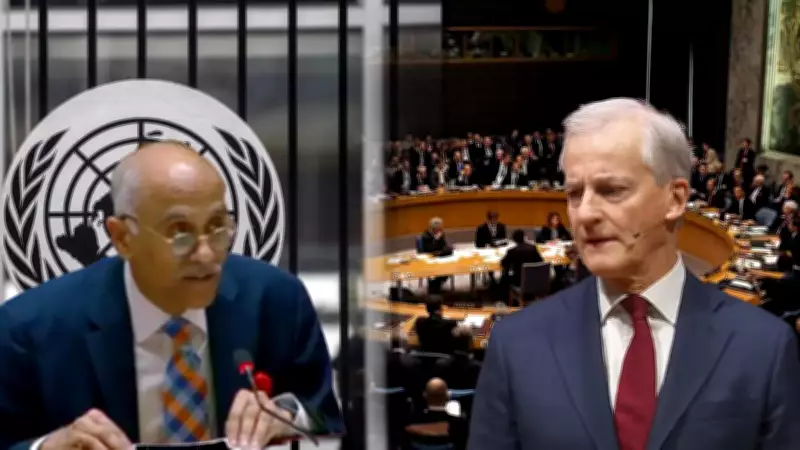
In a significant development that has reignited the global debate on United Nations reform, Norwegian Prime Minister Jonas Gahr Støre has openly challenged the current composition of the UN Security Council. Speaking in Oslo, Støre directly questioned how countries from the Global South, including India, can justify a Security Council that remains dominated by the victors of World War II.
Echoing India's Long-Standing Demand for Overhaul
The Norwegian leader's remarks strongly echo India's persistent and long-held demand for a comprehensive overhaul of the United Nations Security Council. India has repeatedly argued that a governance structure established in 1945 cannot possibly reflect the geopolitical realities and power dynamics of the 21st century. Støre's intervention adds substantial European diplomatic weight to this argument, highlighting growing international consensus on the need for change.
Støre's comments strike directly at the heart of what many analysts describe as a deepening legitimacy crisis facing the United Nations. With multiple conflicts raging across different regions and significant shifts in global power distribution, the current institutional framework appears increasingly outdated. Even UN Secretary-General António Guterres has acknowledged that international institutions remain stuck in the past, unable to effectively address contemporary challenges.

The Growing Momentum for Security Council Expansion
As the G4 nations—India, Brazil, Germany, and Japan—continue their coordinated push for Security Council expansion and the creation of new permanent seats, the Norwegian Prime Minister's statement provides additional diplomatic momentum. India has consistently warned that delaying meaningful reform is no longer merely a procedural matter but represents a genuine danger to global peace and security.
New Delhi has emphasized repeatedly that the international community cannot afford further postponement of UN Security Council restructuring. The current system, which grants permanent membership and veto power exclusively to five nations—the United States, Russia, China, France, and the United Kingdom—fails to represent the diverse voices and interests of the Global South.
The Broader Implications for Global Governance
Støre's questioning of the UNSC's legitimacy comes at a critical juncture in international relations. The Norwegian leader's alignment with India's position signals a potential shift in European perspectives on global governance reform. This development suggests that traditional Western powers may be increasingly receptive to arguments for more inclusive and representative international institutions.
The Norwegian Prime Minister's intervention has effectively amplified India's voice in the ongoing reform debate, creating additional pressure for concrete action. As geopolitical tensions continue to evolve and new security challenges emerge, the urgency of updating the United Nations' primary security body becomes increasingly apparent to a broader range of nations beyond the traditional reform advocates.