Brazil's President Lula Champions UN Security Council Reform, Backs India's Permanent Seat Bid
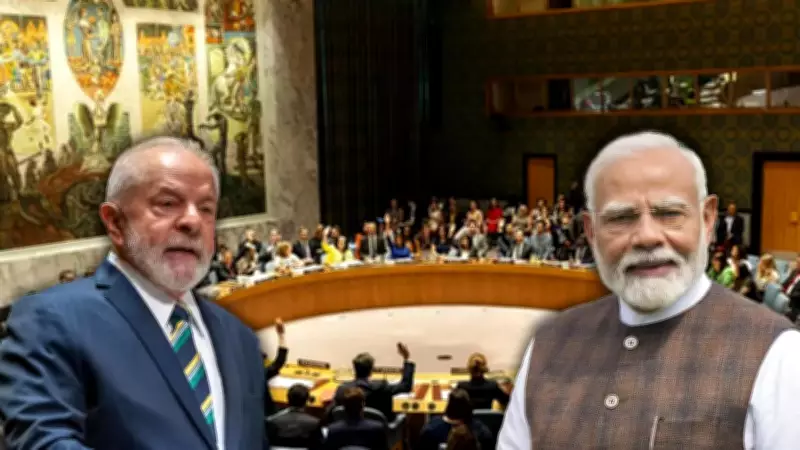
In a significant diplomatic development, Brazilian President Luiz Inacio Lula da Silva has thrown his full support behind India's push for a permanent seat on the United Nations Security Council (UNSC). Following high-level talks with Indian Prime Minister Narendra Modi in New Delhi, President Lula emphasized the urgent need for comprehensive reform of the United Nations, particularly focusing on the Security Council's structure.
G4 Alliance Strengthens Mutual Support for UNSC Reform
President Lula highlighted the crucial role of the G4 group—comprising India, Brazil, Germany, and Japan—in campaigning for UN Security Council reform. This coalition has long advocated for mutual support among its members to secure permanent seats in a restructured Security Council. Lula stressed that the current UN framework must expand its representation to effectively address global conflicts and maintain international credibility.
The Brazilian leader articulated that increasing both permanent and non-permanent seats within the Security Council is essential for enhancing its legitimacy and operational efficacy in global governance. "We will continue to fight for a more representative and effective United Nations," Lula declared, underscoring his commitment to ensuring both Brazil and India secure permanent positions in a reformed Security Council.

Urgent Need for Expanded Global Representation
Lula's statements come at a critical juncture in international diplomacy, where the existing UN Security Council structure faces growing criticism for not reflecting contemporary geopolitical realities. The Brazilian president argued that without meaningful reform, the United Nations risks losing its relevance in managing complex global challenges, from regional conflicts to economic disparities.
The push for UNSC reform has gained momentum in recent years, with developing nations increasingly vocal about their underrepresentation in key international decision-making bodies. Lula's endorsement of India's bid reinforces the strategic partnership between the two major democracies and their shared vision for a more equitable global order.
Implications for Global Governance and Diplomacy
This development signals a strengthening of the Brazil-India alliance within multilateral forums and could potentially accelerate discussions on UN Security Council reform. The G4 group's coordinated efforts, now bolstered by high-level political backing, may increase pressure on other permanent members to consider structural changes to the Security Council.
As global dynamics continue to evolve, the call for UN reform represents not just a diplomatic priority for specific nations but a broader imperative for international institutions to adapt to 21st-century realities. Lula's unequivocal support for India's permanent seat aspiration marks a significant step in this ongoing diplomatic campaign.