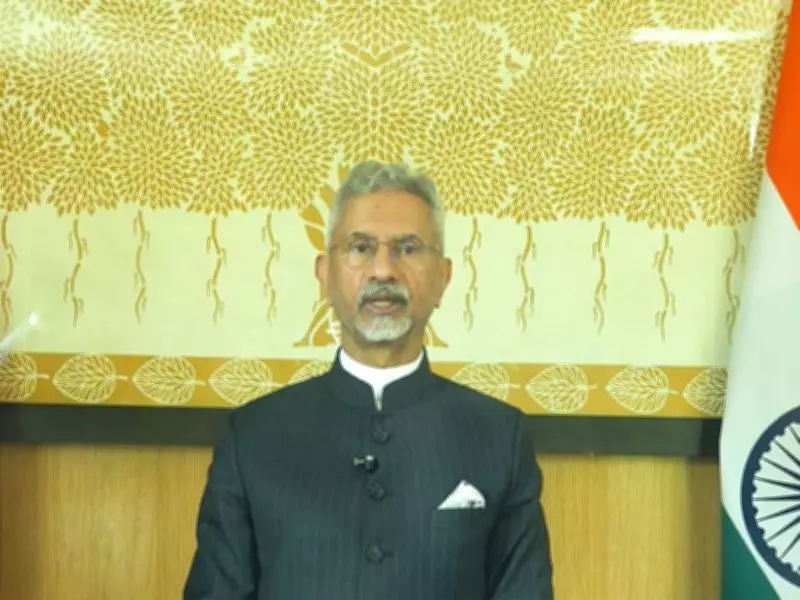
India's UNHRC Mandate Reflects Global Trust, Says Jaishankar at 61st Session
External Affairs Minister Dr. S. Jaishankar addressed the 61st session of the United Nations Human Rights Council (UNHRC) in Geneva, highlighting that India's recent re-election to the council underscores the international community's profound trust in the nation's dedication to human rights and multilateral diplomacy. He emphasized that this mandate is a testament to India's consistent advocacy for inclusive and equitable global governance.
Jaishankar's Address on India's Role and Commitments
In his speech, Jaishankar outlined India's unwavering commitment to promoting and protecting human rights both domestically and internationally. He noted that India's approach is rooted in its civilizational values, democratic principles, and a firm belief in dialogue and cooperation. The minister stressed that India's re-election to the UNHRC for the 2022-2024 term, with an overwhelming majority of votes, reflects global confidence in its ability to contribute constructively to human rights discourse.
Key points from his address include:

- India's role as a bridge-builder in fostering consensus on contentious human rights issues.
- The importance of addressing human rights challenges through a cooperative framework rather than confrontation.
- India's initiatives in areas such as gender equality, poverty alleviation, and healthcare, which align with global human rights objectives.
Global Recognition and India's Diplomatic Efforts
Jaishankar highlighted that India's re-election to the UNHRC is not merely a procedural achievement but a recognition of its substantive contributions to the council's work. He pointed out that India has actively participated in various UNHRC mechanisms, including the Universal Periodic Review, and has supported resolutions aimed at enhancing human rights protections worldwide.
The minister also underscored India's efforts in championing the rights of marginalized communities and promoting sustainable development, which are integral to the UN's human rights agenda. He reiterated India's stance that human rights should be pursued in a manner that respects national sovereignty and cultural diversity, while adhering to international norms.
Implications for India's Foreign Policy and International Standing
This development reinforces India's position as a responsible global actor committed to upholding human rights and fostering international cooperation. Jaishankar's remarks at the UNHRC session signal India's intent to continue playing a proactive role in shaping global human rights policies, leveraging its democratic credentials and developmental experience.
Analysts view this as a significant diplomatic milestone that enhances India's credibility on the world stage, particularly in forums dealing with governance and rights issues. It also aligns with India's broader foreign policy objectives of engaging constructively with multilateral institutions to address global challenges.