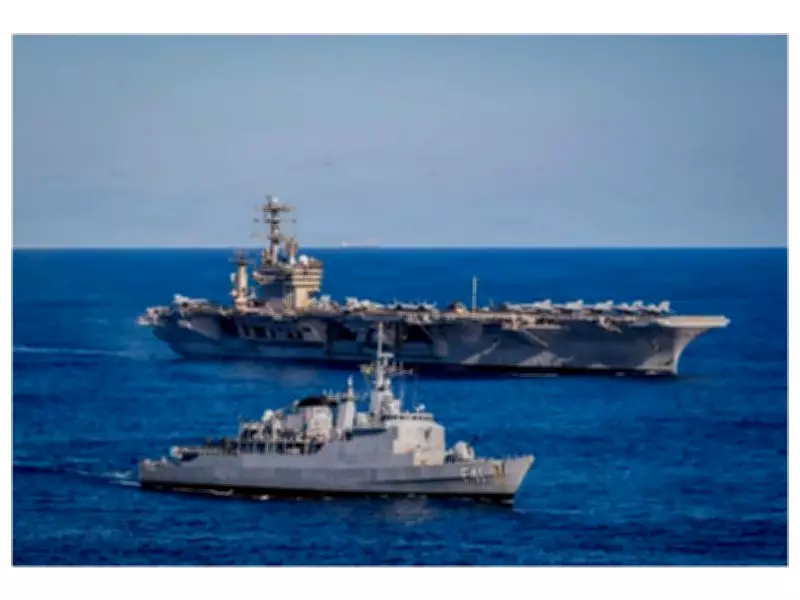
The United States Navy aircraft carrier USS Nimitz has entered the Caribbean Sea, a move that comes amid escalating tensions between Washington and Havana. The deployment is widely seen as a demonstration of military strength and a signal of the US's readiness to respond to any potential threats in the region.
Strategic Deployment in the Caribbean
The USS Nimitz, one of the US Navy's most formidable nuclear-powered aircraft carriers, was reportedly spotted transiting through the Caribbean on its way to conduct routine operations. While the US Navy has not officially commented on the specific reasons for the carrier's presence, defense analysts suggest it is a clear message to Cuba amid recent diplomatic frictions.
Rising Tensions with Cuba
Relations between the United States and Cuba have been strained in recent months, with disagreements over issues ranging from human rights to economic sanctions. The US has accused the Cuban government of suppressing dissent and supporting authoritarian regimes, while Cuba has criticized Washington for its longstanding embargo and interference in its internal affairs.

The arrival of the USS Nimitz adds a new dimension to the already complex relationship. The carrier's presence is likely to be interpreted by Havana as a provocative act, potentially escalating the rhetoric between the two nations. However, US officials emphasize that the deployment is part of routine naval operations and not specifically targeted at Cuba.
Capabilities of the USS Nimitz
The USS Nimitz is a 100,000-ton vessel capable of carrying over 60 aircraft, including F/A-18 Hornets and Super Hornets, as well as electronic warfare planes and helicopters. It serves as a floating airbase that can project power across vast distances, making it a key asset in the US Navy's global strategy.
The carrier's deployment in the Caribbean also allows for rapid response to any regional crises, including natural disasters or security threats. Its presence underscores the US's commitment to maintaining stability in the Western Hemisphere.
Regional Reactions
Neighboring countries in the Caribbean and Latin America are closely watching the situation. While some nations have expressed concern over the potential for increased militarization, others view the US naval presence as a stabilizing force. The Cuban government has yet to issue an official statement regarding the carrier's arrival, but state-run media have highlighted the move as an act of aggression.
Analysts note that the timing of the deployment is significant, coming just weeks after the US announced new sanctions against Cuban officials. The carrier's presence may be intended to back up these diplomatic measures with a show of force.
Historical Context
The US and Cuba have a long history of tension, dating back to the Cold War era. The Cuban Missile Crisis of 1962 brought the world to the brink of nuclear war, and while relations thawed briefly under the Obama administration, they have since deteriorated under subsequent policies. The deployment of the USS Nimitz is reminiscent of past shows of force during periods of heightened tension.
Despite the current strain, both nations have maintained diplomatic channels. The US continues to operate an embassy in Havana, and there are ongoing discussions about issues such as migration and environmental cooperation. However, the carrier's presence suggests that the US is prepared for a range of scenarios, including potential confrontations.
As the USS Nimitz continues its transit through the Caribbean, the world watches for any further developments in US-Cuba relations. The carrier's next destination remains undisclosed, but its presence alone has already made a significant impact on the regional geopolitical landscape.