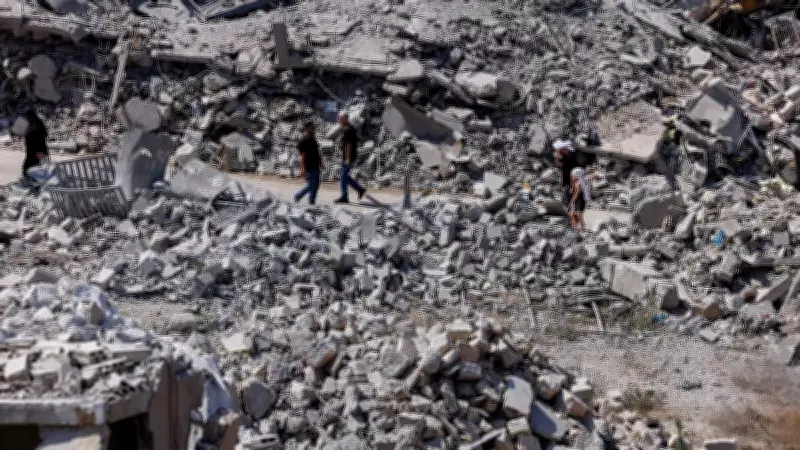
The three-month conflict that engulfed the Gulf region has left an indelible mark, fundamentally reshaping alliances, security perceptions, and the regional balance of power. Although the fighting has subsided for now, a deep unease persists among Gulf nations regarding the emerging agreement between the United States and Iran, according to regional analysts.
Lasting Impact on Gulf Security
The war, which involved direct confrontations between Iran and US-backed Gulf states, has shattered the longstanding notion of American invulnerability in the region. Gulf leaders now question the reliability of US security guarantees, prompting a strategic reassessment. The conflict also exposed the fragility of critical infrastructure, including oil facilities and desalination plants, which were targeted in missile and drone strikes.
According to multiple analysts cited by the International New York Times, the deal being negotiated between Washington and Tehran is viewed in Gulf capitals as insufficient to address Iran's regional ambitions. The agreement reportedly focuses on nuclear restrictions and some missile limits, but does not curb Iran's proxy networks or its ballistic missile program, which Gulf states see as the primary threat.

Shifting Alliances and Defense Postures
In response, Gulf countries have accelerated efforts to diversify their security partnerships. Saudi Arabia and the United Arab Emirates have deepened military cooperation with Israel, a trend that predated the war but has now become more overt. Joint air defense exercises and intelligence sharing have increased significantly. Additionally, Gulf states are investing heavily in indigenous defense industries, aiming to reduce dependence on foreign suppliers.
"The war has been a wake-up call," said a Gulf-based security analyst. "The assumption that the US would always be there to protect us has been severely tested. Now we are building our own capabilities and forging new alliances."
Economic and Humanitarian Toll
The conflict exacted a heavy economic price. Oil production in the Gulf was disrupted for weeks, causing global price spikes. The damage to energy infrastructure in Saudi Arabia and the UAE alone is estimated at tens of billions of dollars. Humanitarian costs were also severe, with thousands of civilian casualties reported across Yemen, Iraq, and southern Iran due to airstrikes and missile attacks.
Shipping lanes in the Strait of Hormuz were effectively closed for a period, stranding tankers and disrupting global supply chains. Insurance premiums for vessels transiting the Gulf have skyrocketed, and some shipping companies are now rerouting via longer, costlier alternatives.
Regional Realignment and the Iran Factor
The war has accelerated a realignment that was already underway: the gradual disengagement of the United States from the Middle East and the rise of local powers. Gulf states are now pursuing direct dialogue with Iran, albeit cautiously, while simultaneously building up their military deterrents. The US-Iran deal, if finalized, is expected to include provisions for de-escalation in Yemen and Iraq, but Gulf officials remain skeptical.
"The deal does not address the root causes of Iran's aggressive behavior," noted a senior Gulf diplomat. "It buys time, but it does not solve the problem. We are preparing for a long-term competition."
Conclusion: A Transformed Gulf
As the region emerges from the conflict, the Gulf is no longer the same. The war has redrawn strategic maps, altered threat perceptions, and forced a painful reckoning with the limits of external protection. Whether the new equilibrium will lead to lasting stability or merely a pause before the next confrontation remains an open question.