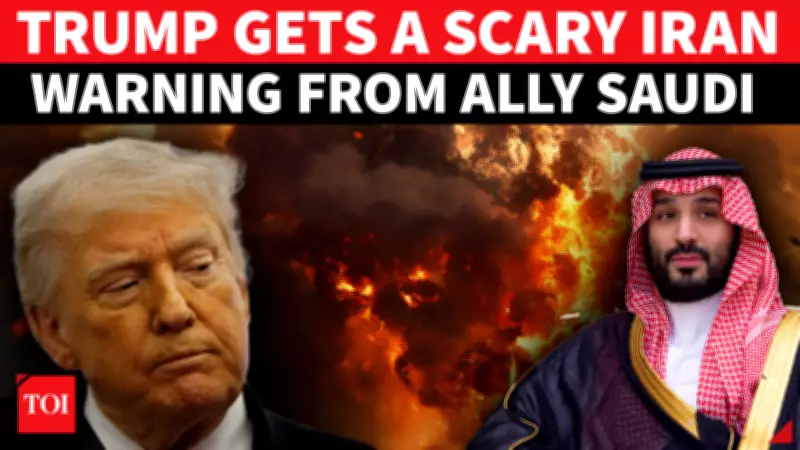
Saudi analyst Mubarak al-Ati has issued a stark warning to former U.S. President Donald Trump over his stance on Iran, arguing that his refusal to return to war or pursue regime change could carry serious consequences. Speaking to Russia Today TV, al-Ati claimed that America's global dominance has weakened and that Gulf powers are charting a more independent course.
Key Points from the Warning
Al-Ati emphasized that Trump's reluctance to engage militarily with Iran or support regime change in Tehran may backfire. He stated that the United States is no longer the unchallenged superpower it once was, and that Middle Eastern nations are increasingly asserting their sovereignty. According to al-Ati, Saudi Arabia is now leading a new regional alignment involving Turkey, Pakistan, and Qatar, signaling a shift away from traditional reliance on Washington.
Shifting Alliances in the Middle East
The analyst's remarks come amid growing debate over U.S. influence in the region. He argued that Gulf states are pursuing more independent foreign policies, reducing their dependence on American security guarantees. The new axis, which includes Turkey and Pakistan, aims to address regional challenges without direct U.S. involvement. Al-Ati warned that Trump's failure to adapt to these changes could cost him dearly, both politically and strategically.

Broader Implications
The warning highlights a broader trend of declining U.S. hegemony in the Middle East. As Iran continues to expand its influence, Gulf nations are diversifying their alliances to ensure their security. The debate over U.S. power is intensifying, with many analysts questioning whether Washington can maintain its traditional role as the region's primary guarantor of stability.
Al-Ati's comments are likely to fuel further discussion about the future of U.S.-Saudi relations and the shifting dynamics of Middle East geopolitics. As the region evolves, the consequences of Trump's Iran policy may become increasingly apparent.