The Middle East is navigating its most severe geopolitical crisis in decades, a direct consequence of the conflict that erupted after Hamas's attack on Israel on October 7, 2023. According to analysis by Vali Nasr, a professor at Johns Hopkins University, Israel's military response has triggered a series of widening conflicts, fundamentally altering the regional balance of power and creating more instability than any single nation can manage.
A Region Transformed by Expanding Conflict
What began as a war in Gaza rapidly expanded into a broader confrontation between Israel and the Iranian-backed "Axis of Resistance." This turned Lebanon, Syria, Yemen, Iran, and even Qatar into active battlefronts. While Israel has scored significant tactical victories—crushing Hamas, degrading Hezbollah's leadership, and reducing Iran's influence in the Levant—these wins have not translated into sustainable political goals or regional unity.
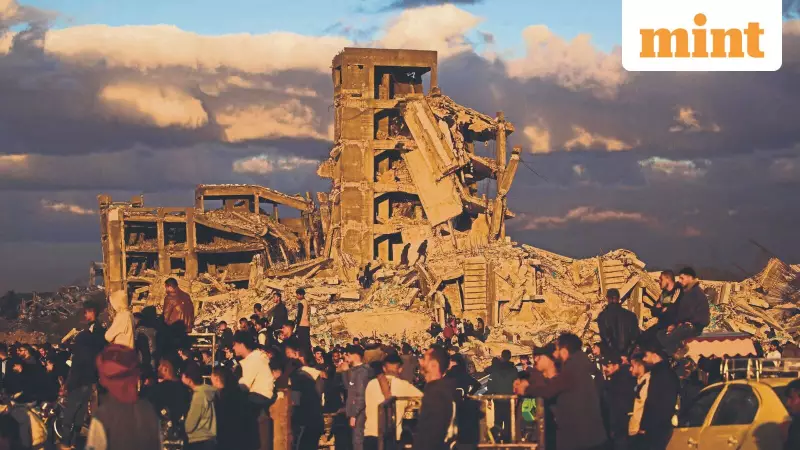
The human cost has been catastrophic, with the Gaza war creating a profound humanitarian disaster. More strategically, the conflict has diminished the roles of traditional power brokers. The United States' role has been sporadic and reactive, its vision of regional economic integration via expanded Abraham Accords effectively sidelined by the war. Simultaneously, the influence of major Arab states has waned.

Israel's Supremacy and the Spiral of Instability
Israel's current strategy ties regional stability to its own military supremacy, a approach experts warn is unsustainable. Israel is pursuing expansive goals, including redrawing borders in the West Bank, southern Lebanon, and southwestern Syria. This maximalist posture, including potential annexation of Palestinian territories, risks shattering existing peace treaties with Arab nations and destabilizing crucial partners like Egypt and Jordan.
"Israel’s warmaking has not served any political goal that would unite the region or foster alliances," notes the analysis. Instead of a stable order, the Levant is fracturing into an "axis of minorities"—with Alawite, Druze, Maronite, Shia, and Sunni camps competing within an expanding Israeli sphere of influence. This sectarian fragmentation, seen in the breakdown of Lebanon and Syria, may offer Israel short-term respite but threatens long-term chaos that could spill over to Turkey and Europe.
The Iranian Calculus and Future Flashpoints
Israel's long-standing view of Iran as its principal threat led to a direct confrontation in June 2025. Israeli airstrikes killed scores of Iranian military leaders and damaged nuclear facilities, followed by US strikes. While weakened, Iran did not collapse and retains its imperative to re-establish deterrence.
The nuclear standoff remains a tinderbox. With European powers reimposing sanctions in September 2025, the diplomatic path has narrowed, increasing the likelihood of renewed conflict. Iran, knowing it cannot rely on missiles alone, may seek better ties with Arab neighbors while also exploiting the very chaos Israeli policy sows in the Levant.
Regional Realignments and a Search for Balance
Heading into 2026Saudi Arabia's security partnership with Pakistan is a prime example of this hedging. America's Arab allies are deeply worried, a fear compounded by Israel's strike on Hamas targets in Qatar, which cast doubt on US security guarantees.
The push for a Gaza ceasefire, while a significant diplomatic win, does not signify a credible American commitment to restore a comprehensive regional order. Consequently, Middle Eastern nations are groping for ways to counterbalance Israel, forming cross-ideological alliances and looking toward China and Russia for support.
The final outcome of the crisis that began in October 2023 remains unclear. What is evident is that the Middle East is bracing for prolonged conflict, with Israel's military supremacy unable to impose a stable peace on a region it has fundamentally reshaken.