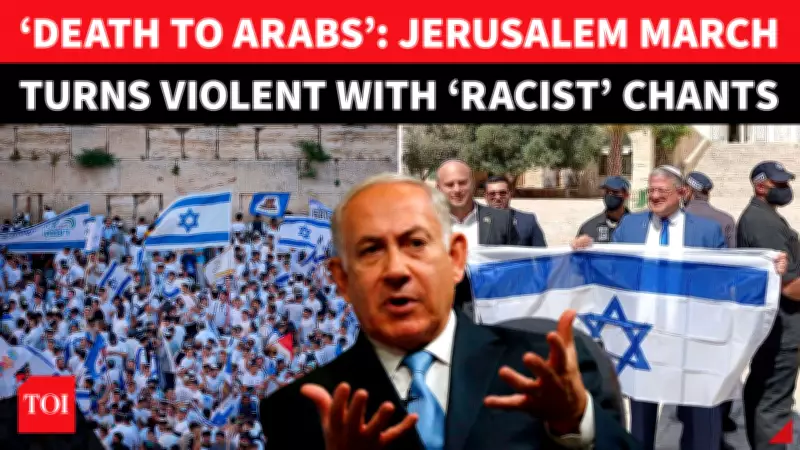
Jerusalem Day tensions exploded as thousands marched through the Old City waving Israeli flags under massive police deployment. Israeli authorities sealed key entrances, forced Palestinian shops to close, and deployed riot police across Jerusalem as crowds moved toward the Western Wall. The situation intensified further after far-right minister Itamar Ben-Gvir raised an Israeli flag at the sensitive holy compound known to Jews as the Temple Mount and Muslims as Al Haram Al Sharif. The annual celebration marking Israel's 1967 capture of East Jerusalem once again highlighted deep political, religious, and security divisions inside one of the world's most contested cities.
Ugly scenes during march
Video footage captured participants shouting 'Death to Arabs' as they marched through Jerusalem's streets. The chants drew widespread condemnation from Palestinian leaders and human rights groups, who described the rhetoric as incitement to violence. The march proceeded despite calls for restraint from international observers concerned about escalating tensions in the region.
Security measures and closures
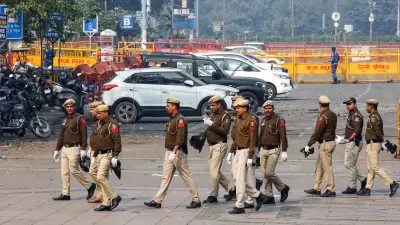
Israeli authorities implemented strict security measures, including sealing key entrances to the Old City and ordering Palestinian-owned shops to remain closed. Riot police were deployed in large numbers to prevent clashes between marchers and Palestinian residents. The heavy police presence was intended to maintain order but also heightened fears of confrontations.

Ben-Gvir's controversial flag-raising
Far-right National Security Minister Itamar Ben-Gvir raised an Israeli flag at the Temple Mount/Al Haram Al Sharif compound, a site sacred to both Jews and Muslims. The move was seen as a provocation by Palestinians and many in the international community, as it challenges longstanding status quo agreements that restrict Jewish prayer at the site. Ben-Gvir's action drew sharp criticism from Palestinian officials and some Israeli opposition figures.
Broader context of Jerusalem Day
Jerusalem Day commemorates Israel's capture of East Jerusalem during the 1967 Six-Day War. For Palestinians, the day marks the beginning of occupation and displacement. The annual march often becomes a flashpoint for violence, with previous years seeing clashes between Israeli forces and Palestinian protesters. This year's events unfolded against a backdrop of heightened tensions across the Middle East, including ongoing conflicts in Gaza and escalating rhetoric between Iran and Israel.
The march also coincided with broader regional instability, including reports of a vessel seizure near UAE's Fujairah and Iranian threats to close the Strait of Hormuz. These developments have added to the sense of crisis in the region, with many observers warning that the situation in Jerusalem could further inflame already volatile dynamics.