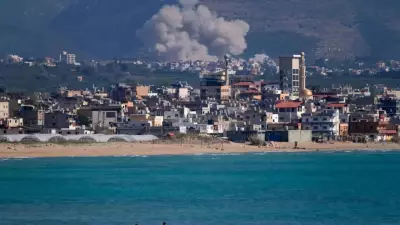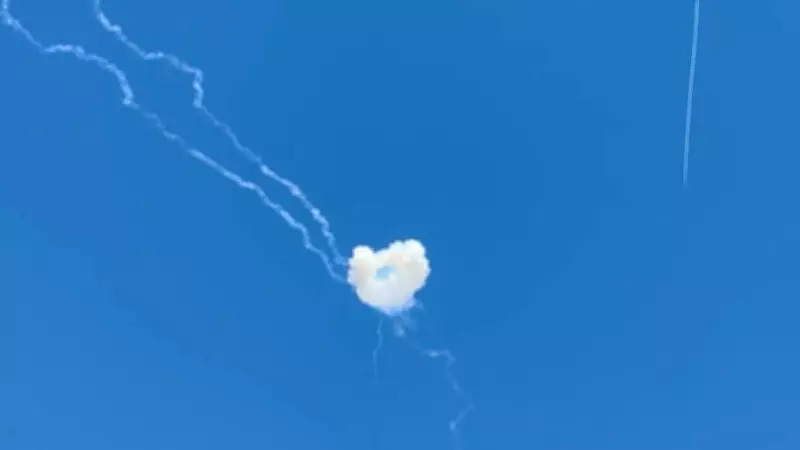
Israel announced on Saturday that it intercepted two projectiles that crossed from Lebanon, marking a significant escalation in cross-border hostilities. The Israeli military confirmed that its air defense systems successfully neutralized the threats, with no injuries or damage reported. This incident comes amid heightened tensions along the Israel-Lebanon border, where sporadic exchanges of fire have occurred in recent weeks.
Iran's Ceasefire Condition
Iran has made a ceasefire in Lebanon between its close ally, Hezbollah, and Israel a condition for any peace deal with the United States, according to a Reuters report. This demand underscores Iran's influence over Hezbollah and its strategic interest in linking regional conflicts to broader diplomatic negotiations. The condition complicates ongoing US-led efforts to de-escalate tensions in the Middle East, as Washington seeks to stabilize the region through separate tracks for Gaza and Lebanon.
Regional Implications
The interception of the projectiles and Iran's stance highlight the fragile security situation in the region. Hezbollah, a powerful Lebanese militant group backed by Iran, has been involved in cross-border skirmishes with Israel since the outbreak of the Gaza war. Analysts warn that any miscalculation could trigger a wider conflict, drawing in multiple state and non-state actors. The United States has urged restraint on all sides, while also pursuing diplomatic channels to address Iran's nuclear program and its regional activities.

Israel has ramped up its defensive measures along the northern border, including deploying additional Iron Dome batteries and conducting reconnaissance flights. The Israeli government has reiterated its commitment to protecting its citizens and responding decisively to any aggression. Meanwhile, Lebanon's government has called for international intervention to prevent further escalation, but its ability to control Hezbollah's actions remains limited.
Historical Context
The Israel-Lebanon border has been a flashpoint for decades, with major conflicts in 2006 and periodic skirmishes since. Hezbollah, which fought a devastating war with Israel in 2006, has since built up its rocket arsenal, posing a significant threat to Israeli population centers. The group's involvement in the current tensions is linked to its solidarity with Hamas, which is also backed by Iran. The interception incident is the latest in a series of exchanges that have raised fears of a broader conflagration.
International mediators, including the United Nations and the European Union, have been working to broker a ceasefire. However, Iran's linkage of a Lebanon ceasefire to US-Iran nuclear talks adds a new layer of complexity. Analysts suggest that Tehran is leveraging its proxies to gain leverage in negotiations over sanctions relief and its nuclear program.