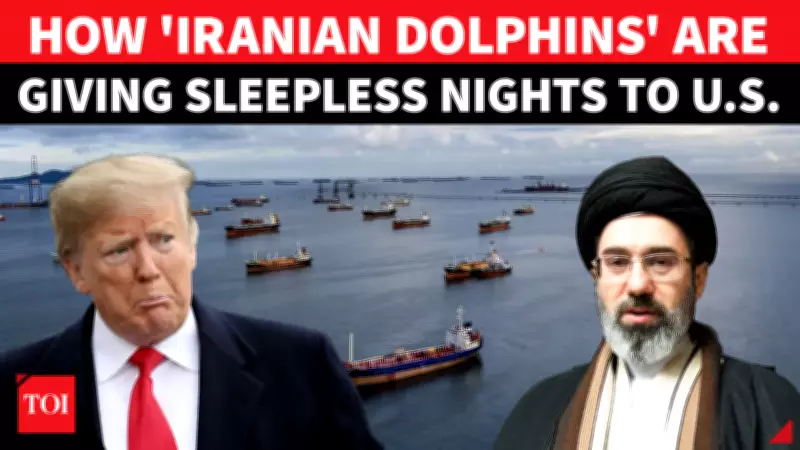
The United States Navy is facing a new and persistent challenge in the strategic waters of the Strait of Hormuz, as Iran has unleashed its fleet of Ghadir-class mini-submarines. These small, diesel-electric vessels, which Iran refers to as 'invisible guardians,' are designed specifically for the shallow and acoustically complex environment of the strait. Built domestically, the Ghadir submarines are loosely based on earlier North Korean designs, but they have been adapted to meet Iran's unique operational requirements.
Operational Capabilities and Tactical Advantages
These compact submarines are engineered to operate quietly, exploiting difficult sonar conditions to avoid detection. While they are limited in range and firepower compared to larger naval assets, analysts highlight their ability to impose disproportionate costs on larger navies operating in confined littoral zones. The shallow waters of the Strait of Hormuz, which are only about 60 meters deep in some areas, make it difficult for large submarines to maneuver, but the Ghadir-class boats excel in these conditions.
Strategic Implications for Regional Security
The deployment of these mini-submarines enhances Tehran's deterrence profile in the sensitive gulf waters. By fielding a fleet of small, hard-to-detect submarines, Iran can threaten shipping lanes and naval operations without committing its larger surface vessels. This asymmetrical approach is a key component of Iran's naval strategy, designed to counter the technological and numerical superiority of the US Navy and its allies.

Analysts suggest that the Ghadir submarines, though individually limited, can be used in coordinated swarms to overwhelm enemy defenses. Their small size allows them to operate in areas where larger submarines cannot go, such as near ports or in shallow coastal waters. This makes them a persistent threat that requires constant monitoring and countermeasures.
Recent Incidents and Escalating Tensions
The situation in the Strait of Hormuz has become increasingly volatile. Recent reports indicate that a vessel seized near the UAE's Fujairah port is reportedly heading toward Iranian waters, raising concerns about further escalation. Meanwhile, Iran has opened new fronts against US allies, and diplomatic tensions have spiked, with Iran firing back after the US pushed an anti-Iran resolution at the United Nations over the Hormuz situation.
The European Union has also weighed in, with a leader dropping a bombshell by stating that 'Iran is not controlling Hormuz' and blasting the Trump administration for attacking Tehran. This complex geopolitical landscape underscores the high stakes involved in the region, where energy supplies and global trade routes are at risk.
Global Reactions and Future Outlook
Russia has condemned Iran's actions, while Saudi Arabia has been implicated in a covert strike against an Gulf state during the Iran war. The US Army has confirmed the death of a second soldier during a military exercise in Morocco, adding to the toll of regional instability. As the situation evolves, the international community watches closely, aware that any miscalculation could lead to a broader conflict.
In conclusion, Iran's deployment of Ghadir-class mini-submarines represents a significant shift in naval warfare tactics in the Persian Gulf. By leveraging these 'invisible guardians,' Tehran aims to level the playing field against more powerful adversaries, ensuring that any military action in the region comes at a high cost.