

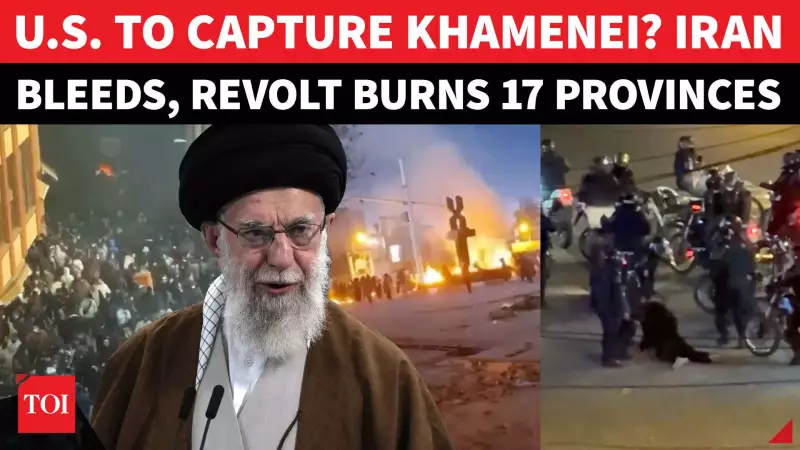
Iran is witnessing its most significant wave of civil unrest in years, with protests now confirmed in at least 17 provinces, posing a severe challenge to the Islamic Republic's leadership. The situation has turned violent, with reports indicating dozens of fatalities as state security forces employ heavy-handed tactics to quell the demonstrations.
From Economic Grievances to Open Defiance
What initially began as public anger over a collapsing economy, severe inflation, and a plummeting national currency has rapidly evolved into a broader political uprising. Protesters are now openly challenging the authority of Supreme Leader Ayatollah Ali Khamenei, a figure long considered untouchable in Iran's political landscape. Chants directly targeting Khamenei have been reported from multiple cities, including some traditionally seen as loyalist strongholds.
The death toll has risen sharply, with credible sources reporting at least 35 killed in clashes between demonstrators and regime forces. The protests, which have spread with remarkable speed, represent the most serious internal threat to the Tehran government since the nationwide demonstrations of 2022.

A Nationwide Revolt and a Brutal Response
The geographical spread of the unrest is a key indicator of its depth. The involvement of 17 provinces suggests discontent is not isolated but nationwide, cutting across various segments of Iranian society. Security apparatus, including the Islamic Revolutionary Guard Corps (IRGC) and Basij militia, have intensified their crackdown, using live ammunition, tear gas, and mass arrests in an attempt to restore order.
Analysts monitoring the situation warn that the government's violent response may be counterproductive. Experts suggest that the heavy-handed tactics are not quelling public fury but are instead deepening resentment, potentially pushing the country toward a more dangerous and protracted phase of conflict. The sight of blood on Iranian streets is fueling further calls for justice and change.
International Repercussions and a Regime Under Pressure
The escalating crisis inside Iran is drawing intense global scrutiny. Human rights organizations are condemning the violent suppression of peaceful protest. The events also have significant implications for regional stability in the already volatile Middle East, as Iran's government grapples with simultaneous internal revolt and external pressures.
This uprising marks a critical juncture for the Islamic Republic. The regime faces a dilemma: continue a brutal crackdown that could isolate it further and ignite more rage, or seek a political solution to address the deep-seated economic and social grievances driving people onto the streets. The world watches as one of the region's most powerful nations navigates this perilous moment, with the lives of its citizens and the future of its political system hanging in the balance.






