

Recent waves of protest in Iran have captured global attention, with many pointing to international sanctions as the primary driver of public anger. However, a leading academic expert from the University of London presents a compelling counter-narrative, arguing that the root cause lies firmly within the country's own borders.
Expert Attributes Unrest to Internal Policy Failures
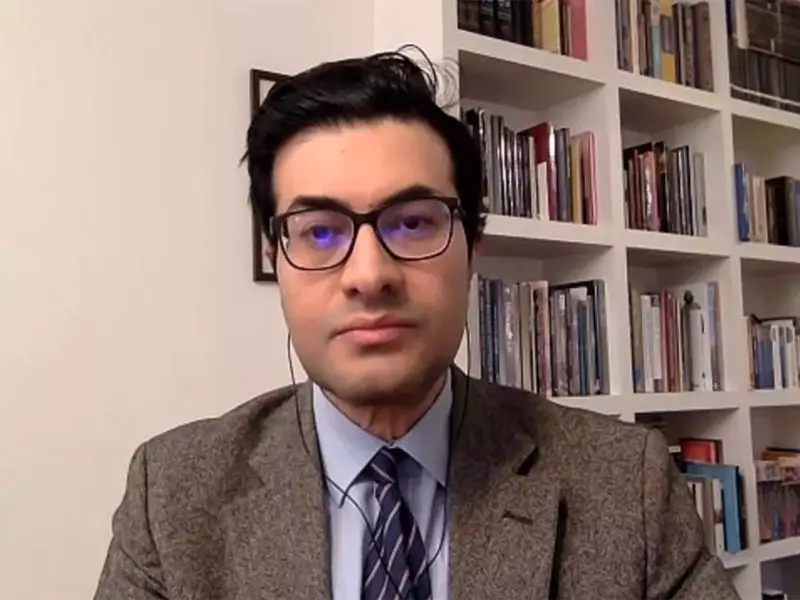
Dr. Roham Alvandi, an associate professor of International History at the London School of Economics and Political Science (LSE), has provided a stark analysis of the situation. In a detailed discussion, Alvandi directly challenges the common external narrative. He asserts that the widespread demonstrations and civil disobedience are a direct consequence of domestic economic mismanagement by the Iranian government, rather than the pressure exerted by foreign sanctions.
The expert's comments come against the backdrop of significant protests that have erupted in Iran, notably following the tragic death of Mahsa Amini in September 2022. While these events triggered the initial outcry, Alvandi emphasizes that the sustained and broadening nature of the protests indicates deeper, systemic economic grievances among the Iranian populace.

Sanctions vs. Sovereignty: Dissecting the Economic Narrative
Alvandi's analysis delves into the complex interplay between external pressure and internal policy. He acknowledges that US-led sanctions have undoubtedly created difficulties for Iran's economy. However, he contends that the Iranian state's own policy choices have significantly amplified the pain felt by ordinary citizens. The government's approach to resource allocation, subsidy management, and monetary policy has, in his view, exacerbated inequality and hindered effective economic resilience.
This perspective shifts the focus from an external scapegoat to internal accountability. It suggests that even within the constrained environment created by sanctions, different policy decisions could have led to less severe domestic outcomes. The professor's argument implies that the government's capacity to mitigate economic hardship has been undermined by its own actions, fueling public frustration and dissent.
Broader Implications for Understanding Iranian Society
The implications of this analysis are profound for observers of Iranian politics and society. By highlighting domestic mismanagement as a key catalyst, Alvandi frames the protests not merely as a reaction to a foreign adversary, but as a homegrown demand for better governance and economic justice. This reframing is crucial for understanding the potential longevity and goals of the protest movement.
It suggests that the unrest is fueled by a fundamental disconnect between the state's economic stewardship and the needs of its people, particularly the youth and women who have been at the forefront of demonstrations. The expert's viewpoint provides a more nuanced lens, moving beyond simplistic geopolitical explanations to examine the internal dynamics of power, resource distribution, and social contract within Iran.
In conclusion, Dr. Roham Alvandi's expert opinion offers a critical correction to the mainstream discourse on Iran's turmoil. While international factors play a role, the core of the crisis, according to this analysis, is indelibly local. The persistent protests serve as a powerful indicator of deep-seated public discontent with how the nation's economy is managed from within, presenting a formidable challenge to the Iranian leadership that cannot be blamed solely on outside forces.






