

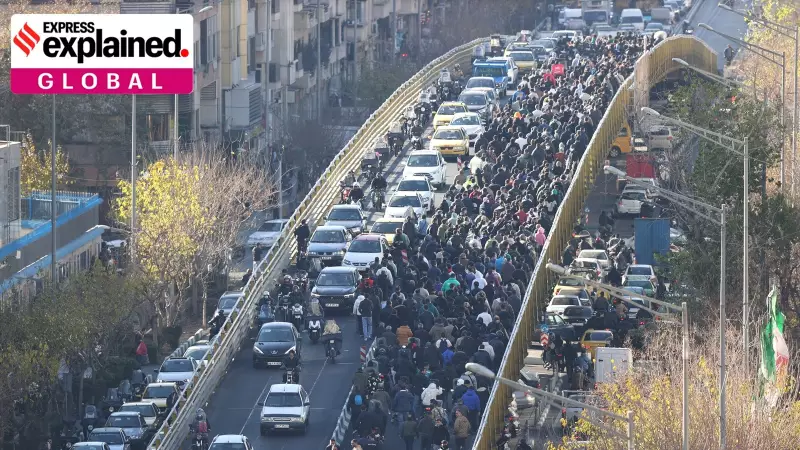
Iran is witnessing a new wave of public protests, driven primarily by severe economic hardships, with at least seven reported fatalities since the demonstrations began in late December 2025. While the agitation has slowed in the capital Tehran, it is spreading to other cities and rural areas, echoing past unrest but on a smaller scale than the 2022 Mahsa Amini protests.
The Spark: Economic Despair and Political Response
The protests initially erupted among shopkeepers angered by the rapid depreciation of Iran's currency and skyrocketing prices. They have since drawn in students and other groups, with videos showing protesters setting objects ablaze and chanting anti-government slogans like "Shameless!" in the streets. In a significant admission, President Masoud Pezeshkian validated the core grievance, stating that frustrations over Iran's economic conditions are legitimate.
On January 2, 2026, US President Donald Trump escalated tensions with a provocative social media post. He warned, "If Iran shots and violently kills peaceful protesters, which is their custom, the United States of America will come to their rescue. We are locked and loaded and ready to go." This statement has added an international dimension to the domestic crisis.

Anatomy of an Economic Collapse
The numbers paint a dire picture of Iran's economy. According to a recent World Bank analysis, GDP growth slowed to just 3.7% in 2024/25, the lowest in five years, largely due to a sharp deceleration in the crucial oil sector. The currency has been in freefall, with one US Dollar now equaling approximately 1.4 million Iranian rials. Inflation is rampant, hitting 42.2% in December year-on-year, making essentials like food and medicine prohibitively expensive.
The World Bank further highlighted a deep employment crisis, where only 3.8 out of 10 working-age Iranians are employed. For women, the rate plummets to a mere 1.2 in 10. The report grimly predicts that the recent economic contraction could push an additional 2 million people into poverty in 2025. The situation is so critical that the head of Iran's Central Bank recently stepped down.
The Sanctions Stranglehold and Failed Diplomacy
Iran's economic troubles are deeply rooted in decades of international sanctions, intensifying in the 2010s to curb its nuclear program. These sanctions, especially secondary ones imposed by the US, crippled oil exports and isolated Iran from the global financial system. A brief respite came with the 2015 Joint Comprehensive Plan of Action (JCPOA or Iran Nuclear Deal), which promised sanctions relief in exchange for nuclear curbs.
However, the deal unraveled after President Trump unilaterally withdrew the US in 2018. Efforts to revive negotiations have repeatedly failed. In a major setback in September 2025, European powers—the UK, France, and Germany—reactivated sanctions via a "snapback" mechanism, citing Iran's lack of cooperation. Iran also halted neutral inspections of its nuclear facilities after reported attacks by Israel and the US in June.
Broken Trust and an Uncertain Future
The current protests occur against a backdrop of profound public disillusionment. The historically low 40% voter turnout in the first round of the 2024 presidential election signaled widespread despondency. Analysts suggest Iranians feel their political voice is not translating into tangible improvements, be it relief from sanctions or greater personal freedoms.
While reformist President Pezeshkian has promised "fundamental actions" to reform the monetary system and urged dialogue, he also issued a stern warning against foreign aggression. The ultimate authority, Supreme Leader Ayatollah Khamenei, 86, presides over a regime facing multiple challenges, from geopolitical setbacks with allies like Hamas and Hezbollah to direct confrontations with the US and Israel.
With the nuclear deal dead, sanctions tightening, and the economy in a tailspin, prospects for immediate relief for ordinary Iranians appear dim. Whether these economic protests evolve into a sustained political movement remains unclear, but they underscore a deepening crisis of legitimacy and a population pushed to the brink by enduring hardship.






