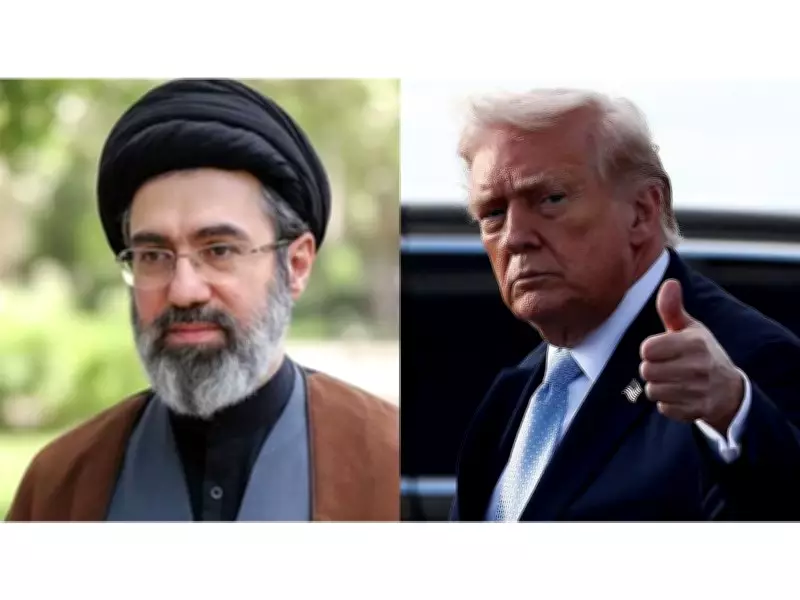
Iran's Supreme Leader Mojtaba Khamenei has taken a firm stance against a key demand from former US President Donald Trump, declaring that enriched uranium should not leave the country. This position directly challenges Trump's insistence that Iran export its enriched uranium as part of any potential nuclear agreement.
Khamenei's Defiant Statement
In a speech broadcast on state television, Khamenei asserted that Iran's enriched uranium stockpile is a national asset and must remain within the country's borders. He argued that shipping out enriched uranium would undermine Iran's nuclear sovereignty and its ability to develop peaceful nuclear energy for domestic use. The Supreme Leader emphasized that Tehran would not bow to external pressure, particularly from the United States, which has a history of hostile policies toward Iran.
Background of the Nuclear Dispute
The demand for Iran to export its enriched uranium has been a central point of contention since the US withdrawal from the Joint Comprehensive Plan of Action (JCPOA) in 2018. Under the original nuclear deal, Iran was allowed to maintain a limited stockpile of enriched uranium, with excess amounts either diluted or shipped abroad. Trump's administration sought to eliminate Iran's enrichment capabilities entirely, leading to a breakdown in negotiations.

Tehran has consistently maintained that its nuclear program is for peaceful purposes, including power generation and medical research. However, the International Atomic Energy Agency (IAEA) has reported that Iran has enriched uranium to levels close to weapons-grade, raising concerns among Western nations. Khamenei's latest remarks signal that Iran is unwilling to compromise on what it considers a fundamental right under the Non-Proliferation Treaty (NPT).
Implications for Future Talks
Khamenei's hardening stance complicates prospects for renewed negotiations between Iran and the United States. Diplomatic efforts have been stalled as both sides remain entrenched in their positions. The Supreme Leader's defiance suggests that any future agreement would require significant concessions from Washington, including the lifting of all sanctions and recognition of Iran's enrichment program.
Analysts warn that the standoff could escalate tensions in the Middle East, particularly if Iran continues to expand its nuclear activities. Meanwhile, European powers have urged restraint and called for a diplomatic solution. The situation remains fluid, with both domestic and international actors closely monitoring developments.