

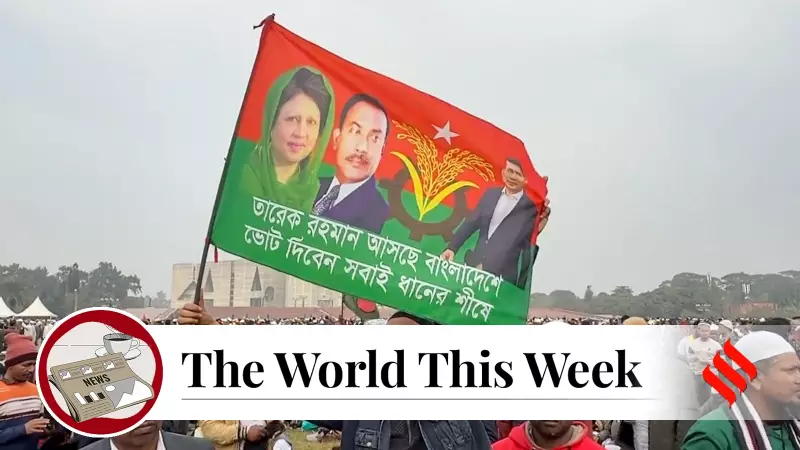
This week's global landscape was shaped by significant political and humanitarian developments, ranging from a health crisis for a former prime minister in Bangladesh to escalating geopolitical tensions in the Middle East. These events underscore the interconnected nature of regional stability and international relations.
Khaleda Zia's Medical Crisis and Political Implications in Bangladesh
The health of former Bangladeshi Prime Minister Khaleda Zia took a serious turn, bringing the nation's fraught political dynamics back into sharp focus. The 78-year-old leader of the Bangladesh Nationalist Party (BNP) was rushed to a hospital in Dhaka's Gulshan area after her condition deteriorated. She was reportedly suffering from internal bleeding and low haemoglobin levels.
This medical emergency occurs within a complex legal and political context. Khaleda Zia has been convicted in multiple corruption cases and was released from jail in 2020 on a suspended sentence, under the condition that she would not travel abroad for medical treatment. Her family and party have repeatedly sought permission for her to receive advanced care overseas, but the government, led by Prime Minister Sheikh Hasina, has denied these requests.

The situation has intensified the long-standing rivalry between the country's two most powerful political families. With the BNP boycotting the last general election, Zia's health crisis adds another layer of uncertainty to Bangladesh's political future, raising questions about governance, justice, and the treatment of political opponents.
Middle East Tensions: A Shifting Geopolitical Chessboard
Simultaneously, the Middle East witnessed a series of events highlighting the fragile and volatile nature of regional alliances and conflicts. A significant development was the withdrawal of the United Arab Emirates (UAE) from a U.S.-led maritime coalition. This coalition was tasked with protecting commercial shipping in the Red Sea and Gulf regions.
The UAE's decision to step back is seen as a strategic move to de-escalate tensions with Iran and the Houthi rebels in Yemen, with whom it has been engaged in a protracted conflict. This action signals a potential recalibration of the UAE's foreign policy, prioritizing direct diplomacy and regional stability over alignment with broader international military initiatives.
Yemen Conflict and Broader Regional Rivalries
The conflict in Yemen remains a central flashpoint. Iran's support for the Houthi rebels continues to be a major point of contention with Saudi Arabia and its allies. Recent months have seen a notable reduction in cross-border attacks between Saudi Arabia and the Houthis, following a China-brokered deal to restore diplomatic ties between Riyadh and Tehran in March 2023.
However, the underlying rivalry persists. The UAE's withdrawal from the maritime coalition can be interpreted as an effort to safeguard its own economic and security interests, which are heavily dependent on open sea lanes, while cautiously engaging with regional actors to find a political solution in Yemen.
Analysis and Global Repercussions
The convergence of these events—from Dhaka to the Gulf—demonstrates how domestic political struggles and regional power plays have far-reaching consequences. Khaleda Zia's health is not merely a personal tragedy but a political event that could influence Bangladesh's democratic trajectory.
In the Middle East, the UAE's pragmatic foreign policy shift underscores a trend where regional powers are increasingly pursuing independent paths to secure their interests, sometimes diverging from traditional allies like the United States. The ongoing Saudi-Iran détente, though fragile, offers a glimmer of hope for reducing conflicts in Yemen and beyond, but the path remains fraught with challenges.

For the international community and India, these developments are crucial. Stability in Bangladesh affects regional cooperation in South Asia. Meanwhile, peace in the Middle East is vital for global energy security and the safety of international shipping routes, which are lifelines for trade-dependent economies worldwide. The week's events remind us that in our interconnected world, a political crisis or a strategic realignment in one region can send ripples across the globe.





