

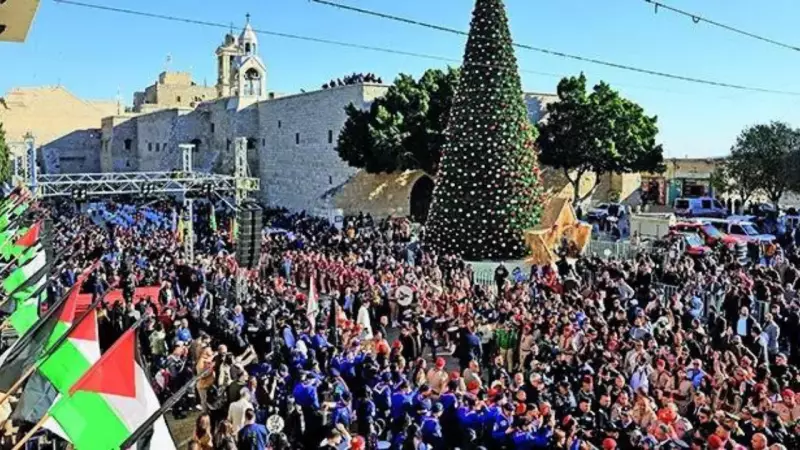
For the first time in two years, the historic city of Bethlehem witnessed the return of its grand Christmas Eve celebrations, drawing thousands to the iconic Manger Square. The festive spirit, marked by the reappearance of the giant Christmas tree and the sounds of scout bagpipes, offered a poignant moment of hope amidst the ongoing shadow of the Israel-Hamas conflict.
A Celebration of Light After Years of Darkness
The city, revered as the birthplace of Jesus Christ, had cancelled its public Christmas festivities for the past two years. During that sombre period, Manger Square featured a stark nativity scene depicting the infant Jesus surrounded by symbolic rubble and barbed wire, reflecting the grim realities of Gaza. This year, the mood shifted as Cardinal Pierbattista Pizzaballa, the top Catholic leader in the Holy Land, inaugurated the celebrations. Leading the traditional procession from Jerusalem to Bethlehem on Wednesday, he called for "a Christmas full of light."
Addressing the gathered crowd of thousands, which included both Christians and Muslims, Cardinal Pizzaballa conveyed greetings from Gaza's small Christian community. He had held a pre-Christmas Mass there just days earlier. "We, all together, we decide to be the light, and the light of Bethlehem is the light of the world," he proclaimed, highlighting a collective desire to rebuild from devastation.

Tourism-Dependent City Feels War's Economic Impact
Despite the palpable holiday cheer, the severe economic impact of the war was acutely felt in Bethlehem, located in the Israeli-occupied West Bank. Approximately 80% of the city's residents, who are predominantly Muslim, rely on tourism-related businesses for their livelihood. The celebratory crowd in Manger Square was composed largely of local residents, with only a handful of foreign visitors present—a stark contrast to pre-pandemic and pre-conflict times.
Some residents, however, saw glimmers of change. Georgette Jackaman, a tour guide who had been out of work for over two years, expressed cautious optimism. "Today is a day of joy, a day of hope, beginning of the return of normal life here," she said. The sentiment was echoed by logistics worker Fadi Zoughbi, who noted his children's ecstatic reaction to seeing marching bands parade through the streets once more.
Personal Journeys and Persistent Hurdles
The celebrations also drew visitors seeking understanding. Mona Riewer, a visitor from France, stated she came "to better understand what people in Palestine are going through," sensing the hardship they had endured. For local families, participation itself was a testament to resilience. Irene Kirmiz, who now lives in Ramallah, returned with her family for the beloved scout parade tradition, in which her 15-year-old daughter performs.
Their journey, however, underscored the ongoing challenges. The family had to wake up at 5 a.m. and endure waits of over three hours at Israeli checkpoints to reach Bethlehem in time. "It's very emotional seeing people trying to bounce back, trying to celebrate peace and love," Kirmiz remarked, capturing the bittersweet essence of a Christmas celebration striving to reclaim its joy against a backdrop of conflict and economic strain.






