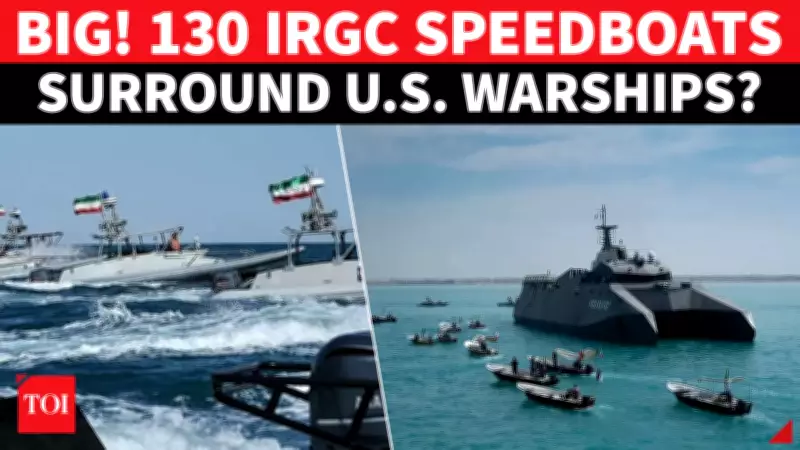
Tensions in the Strait of Hormuz are rising sharply after fresh satellite imagery reportedly showed more than 130 IRGC Navy speedboats operating in coordinated formations across the strategic waterway. Regional monitoring accounts described the deployment as one of Iran's largest visible naval maneuvers in recent years. The development comes amid heightened US-Iran tensions following reported strikes on Iranian military infrastructure and fresh incidents involving commercial vessels near Gulf waters.
Satellite Evidence and Swarm Tactics
Analysts examining high-resolution images identified clusters of fast-attack craft moving in synchronized patterns, a tactic known as "swarming" that aims to overwhelm larger naval assets. The IRGC has long practiced such maneuvers, but the scale of this deployment is unprecedented in recent memory. The speedboats are equipped with machine guns, rocket launchers, and anti-ship missiles, posing a significant threat to US warships patrolling the region.
Strategic Implications
The Strait of Hormuz is a critical chokepoint for global oil shipments, with about 20% of the world's petroleum passing through its narrow waters. Any disruption could trigger a spike in energy prices and escalate into a broader conflict. The US Navy's Fifth Fleet, based in Bahrain, maintains a constant presence to ensure freedom of navigation. In response to the Iranian maneuvers, US naval forces have reportedly heightened alert levels and are conducting additional surveillance flights.

Broader Context of US-Iran Tensions
The speedboat deployment follows a series of confrontations. Last month, the US carried out airstrikes on Iranian-linked targets in Syria and Iraq after a drone attack killed three American soldiers. Iran has also been accused of seizing commercial vessels in the Gulf, further destabilizing the region. The IRGC's show of force appears aimed at demonstrating its ability to challenge US naval supremacy and retaliate against any perceived aggression.
International Reactions
Global powers have called for restraint. The United Nations urged both sides to de-escalate, while European allies expressed concern over the potential for miscalculation. Iran's Foreign Ministry defended the exercise as a routine defensive measure, asserting its right to secure its territorial waters. However, US officials dismissed this, citing the provocative nature of the swarm tactic near international shipping lanes.
What Comes Next
Military experts warn that the situation could spiral out of control if either side misinterprets the other's actions. The US has previously warned that it would respond decisively to any threats against its vessels. Meanwhile, Iran continues to develop its asymmetric naval capabilities, including unmanned boats and advanced torpedoes. The coming weeks will be critical in determining whether diplomacy or further confrontation prevails in the Gulf.