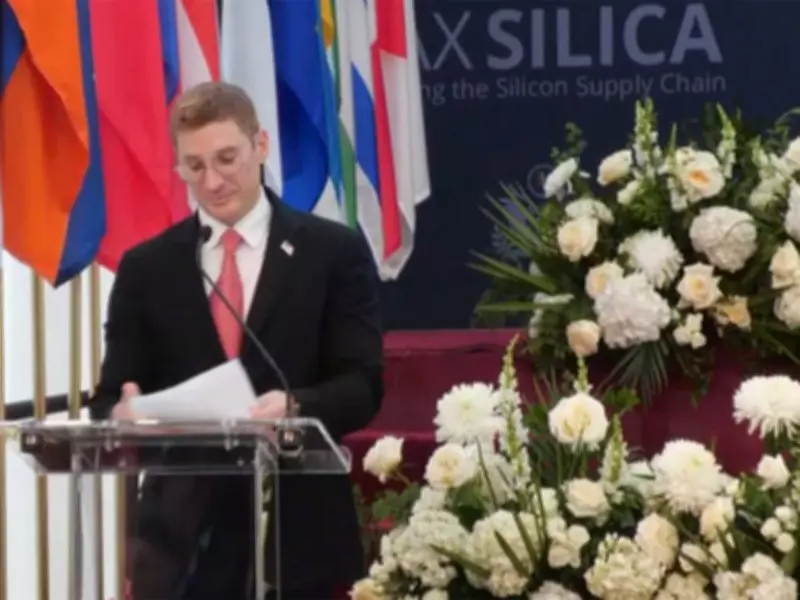
US Unveils PaxPass and Foundry School at Pax Silica Summit
The second Pax Silica Summit, held in Washington on Thursday, brought together a coalition of over 30 governments and economies, including new observer nations, to address the impact of artificial intelligence on global economic growth and competitiveness. The summit emphasized trusted partnerships to build resilient AI ecosystems, attract investment, and ensure shared prosperity.
Key Announcements: Declaration on AI Opportunity
US Under Secretary of State Jacob S. Helberg announced the launch of PaxPass, a platform to streamline the movement of critical AI goods, and the Foundry School, a workforce development initiative in partnership with Stanford University to train advanced manufacturing leaders. Helberg stated, "Pax Silica is designed to be an action platform. Not another international bureaucracy. It's a practical toolkit that enables trusted partners to solve problems together, pilot new ideas and scale what works."
PaxPass: Transforming AI Supply Chain Movement
Helberg detailed that PaxPass will combine cargo verification, AI-powered risk assessment, and pre-approved expedited processing for trusted shipments. "Pax Pass will reduce friction, strengthen supply chain resilience and accelerate trusted trade. To support this effort, the United States is committing $50 million in foreign assistance funding dedicated to the development and deployment of Pax Pass," he said. The initiative initially targets Pax partners shipping high-value AI supply chain products through Panama.

Foundry School: Workforce Development for AI Era
The Foundry School, built in partnership with Stanford, aims to equip entrepreneurs, engineers, and advanced manufacturing leaders across Pax Silica economies. It will begin with a seminar series at Stanford featuring leading figures in advanced manufacturing, followed by a curriculum for institutions across partner economies. Helberg expressed hope that this would be the first of several such zones, creating a connected ecosystem for investment and innovation.
Innovation Sovereignty Over Restriction
Helberg stressed the need for innovation sovereignty, stating, "The real measure of sovereignty in the AI age is not the ability to recreate yesterday's technologies... It is the ability to contribute to tomorrow's breakthroughs." He called for creating conditions for entrepreneurs to build, researchers to discover, and companies to invest. The Declaration on AI Opportunity, signed by many governments, commits to pro-growth AI policies, trusted technology ecosystems, resilient supply chains, and infrastructure investment.
US Deputy Secretary Emphasizes Public-Private Alignment
US Deputy Secretary of State Christopher Lando highlighted the summit's purpose: "align public purpose with private capability. Strip away the friction that has held our firms back and let free enterprise do what no government program ever could." He noted that over 20 countries support the AI Opportunity concept, which promotes a pro-innovation approach to regulation. Lando advocated building a new economic order with trusted partners, moving away from supply chains as pressure points.
Shift from Digital Sovereignty to Innovation Sovereignty
The Pax Silica summit underscored a shift from digital sovereignty to innovation sovereignty, promoting collaboration over isolation in AI development. The initiatives announced aim to create a practical toolkit for trusted partners to solve problems together and scale what works, backed by real investment from the United States.