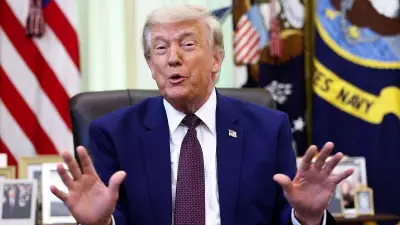
In a significant move aimed at managing escalating trade tensions, the administration of President Donald Trump has announced a major decision regarding tariffs on Chinese semiconductors. The new import duties, confirmed on Tuesday, December 23, will now only come into effect in June 2027, providing a substantial multi-year window for ongoing diplomatic and trade negotiations between the world's two largest economies.
Investigation and Rationale Behind the Tariff Decision
This pivotal announcement follows the conclusion of a year-long "Section 301" investigation, a probe that was originally initiated under the preceding Biden administration. The investigation's findings were clear: it determined that China's state-backed strategy to achieve dominance in the global market for "legacy" semiconductors is both "unreasonable" and acts as a restriction on American commerce.
The United States Trade Representative (USTR) formally stated that Beijing's targeted support for its chip industry constitutes an unfair trade practice, necessitating a federal response. While the precise percentage of the impending tariff has not been finalized, officials have committed to announcing the specific rate at least 30 days before the implementation date in 2027.

A Strategic Delay to De-escalate Tensions
Analysts view this lengthy delay as a calculated move by the Trump administration. It essentially preserves crucial economic leverage for future discussions while actively working to reduce immediate bilateral friction. The decision comes against a backdrop of recent retaliatory measures from China, which include export curbs on rare earth metals—vital components for chip manufacturing and space technology.
Given that China commands the vast majority of the global supply of these critical materials, the stakes are high. In what appears to be a reciprocal de-escalation, Washington has agreed to postpone rules that would have tightened restrictions on US technology exports to certain Chinese firms on its trade blacklist, in exchange for a delay in China's metal export controls.
Adding to an Existing Framework of Duties
It is important to note that these newly announced, but delayed, tariffs represent an additional layer on top of existing measures. The landscape of US-China tech trade is already shaped by earlier policies, including an additional 50% tariff on Chinese semiconductors implemented by former President Joe Biden, which took effect on January 1, 2025.
This latest development underscores the complex and ongoing nature of the technological and economic rivalry between the United States and China. The extended timeline until 2027 sets the stage for a prolonged period of negotiation, where the future of global semiconductor supply chains and trade relations will be intensely debated.