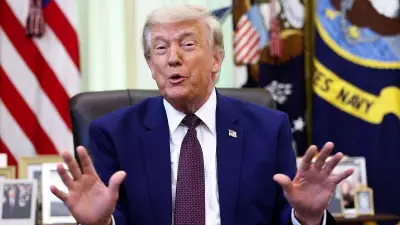
Trump Issues Dire Warning to Canada Over China Trade Deal
In a dramatic escalation of trade tensions, former United States President Donald Trump has publicly threatened Canada with a massive 100% tariff on its exports to the US. This warning comes as a direct response to Canada's potential move to finalize a trade agreement with China, a development that Trump views as a significant threat to American economic interests.
The Core of the Trade Dispute
The controversy centers on Canada's ongoing negotiations with China to establish a comprehensive trade pact. Trump, known for his aggressive "America First" trade policies during his presidency, has made it clear that he considers such a deal between Canada and China to be unacceptable. He argues that it could undermine the economic stability and competitive edge of the United States in the global market.
Trump's statement was unequivocal: if Canada proceeds with the China trade deal, the US will retaliate by imposing a full 100% tariff on all Canadian goods entering the United States. This would effectively double the cost of Canadian products for American consumers and businesses, potentially crippling key sectors of the Canadian economy that rely heavily on exports to the US.

Potential Impacts on Bilateral Relations
The threat has sent shockwaves through diplomatic and economic circles, raising concerns about a severe strain in the long-standing US-Canada relationship. Canada is one of the United States' largest trading partners, with billions of dollars in goods and services exchanged annually. A 100% tariff could lead to:
- Disrupted supply chains across various industries, including automotive, agriculture, and energy.
- Increased prices for American consumers on a wide range of products, from maple syrup to manufactured goods.
- Possible retaliatory measures from Canada, sparking a full-blown trade war that could destabilize the North American economy.
Experts warn that such a move would not only hurt Canada but also have negative repercussions for the US economy, potentially leading to job losses and inflationary pressures. The timing is particularly sensitive as global trade dynamics are already shifting due to geopolitical tensions and post-pandemic recovery efforts.
Broader Implications for International Trade
This development highlights the ongoing complexities in international trade relations, especially involving major economies like the US, China, and Canada. Trump's warning underscores his continued influence on trade policy debates, even out of office, and signals a possible return to protectionist strategies if he were to regain power.
Canada now faces a difficult decision: proceed with the China trade deal and risk devastating tariffs from the US, or abandon the negotiations to preserve its crucial economic ties with its southern neighbor. The outcome could set a precedent for how countries navigate the delicate balance between forging new trade partnerships and maintaining existing ones in an increasingly polarized world.
As the situation unfolds, stakeholders are closely monitoring responses from the Canadian government, Chinese officials, and current US leadership. The potential for escalated trade conflicts remains high, with significant consequences for global economic stability.