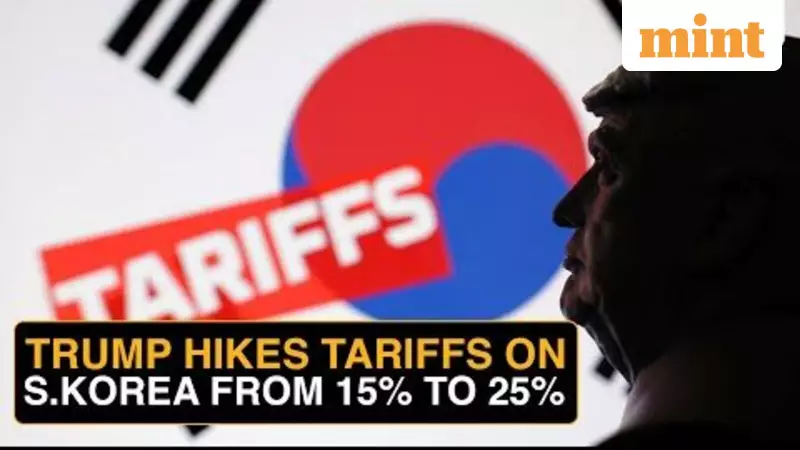
Trump Escalates Trade Pressure with 25% Tariffs on South Korea
In a significant escalation of trade tensions, former US President Donald Trump has imposed fresh tariffs of 25% on key imports from South Korea, marking a sharp increase from the previous 15% rate. This move targets critical sectors including automobiles, lumber, and pharmaceuticals, directly impacting one of America's longstanding trade partners in Asia.
Root Cause: Unratified Trade Deal Sparks Tariff Hike
The tariff increase stems from South Korea's failure to ratify a trade agreement negotiated last year through its National Assembly. Trump, known for his assertive trade policies, justified the action by stating, "We acted swiftly—now they must." This underscores his administration's strategy of using tariffs as leverage to enforce compliance with international trade terms.
Broader Context: Aggressive Tariff Diplomacy in Play
This decision is part of a broader pattern of aggressive tariff diplomacy under Trump's leadership. Similar threats have been directed at Europe over issues like Greenland and at Canada concerning its ties with China. By targeting South Korea, the US signals a willingness to apply economic pressure on allies to achieve strategic objectives, potentially reshaping global trade dynamics.

Immediate Fallout: Seoul Scrambles to Respond
In response to the tariff hike, South Korea is scrambling to mitigate the economic impact. The country's industry minister is reportedly heading to Washington for urgent talks, highlighting the severity of the situation. This move adds to mounting economic pressure on Seoul, which now faces higher costs for exporting key goods to the US market.
Key Sectors Affected by the Tariff Increase
- Automobiles: A major export for South Korea, facing steeper barriers in the US.
- Lumber: Essential for construction and manufacturing, now more expensive.
- Pharmaceuticals: Critical for healthcare, subject to increased duties.
The tariff hike from 15% to 25% represents a substantial rise that could disrupt trade flows and strain diplomatic relations between the two nations. As South Korea navigates this challenge, the global community watches closely, anticipating further developments in this high-stakes trade dispute.