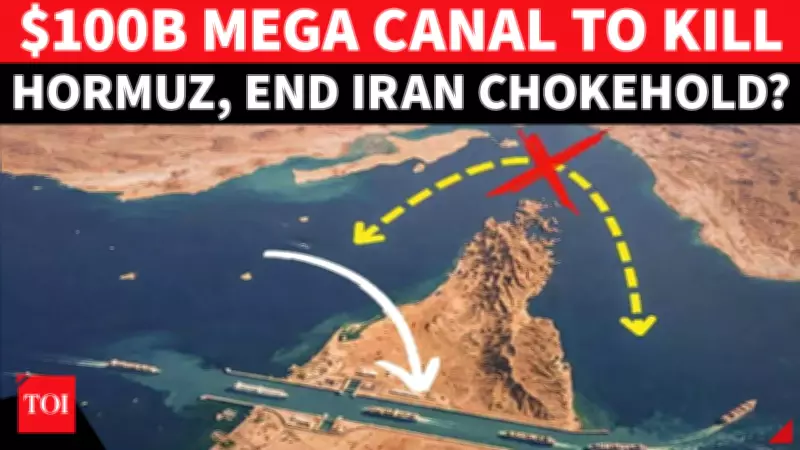
A $100 Billion Canal to Bypass Hormuz? The Proposal That Could Reshape Global Oil Routes
In the wake of escalating tensions and conflict, Iran has effectively choked the world's most critical oil artery: the Strait of Hormuz. This strategic waterway, through which approximately one-fifth of the world's oil passes, is now a focal point of a severe global energy shock. The disruption has forced oil prices to surge above $100 to $120 per barrel, sending ripples through economies worldwide and highlighting the fragility of global energy supply chains.
The Crisis and Its Global Impact
The closure or significant obstruction of the Strait of Hormuz by war-hit Iran has created an urgent need for alternative routes. This crisis is not just a regional issue; it has forced major global players, particularly the United States and its allies, to scramble for solutions to mitigate the energy shortfall. The reliance on this narrow strait has long been a vulnerability, and current events have exposed it starkly, prompting calls for innovative and long-term strategies to ensure energy security.
The Proposed Solution: A Canal Through Oman
Amidst this turmoil, a novel proposal has emerged from a data scientist, suggesting the construction of a massive canal through Oman's rugged Musandam Peninsula. This ambitious project, estimated to cost around $100 billion, aims to create a new maritime passage that would allow ships to bypass the Strait of Hormuz entirely. By carving through this challenging terrain, the canal could provide a safer and more reliable route for oil tankers and other vessels, reducing dependency on the volatile strait.

The Musandam Peninsula, known for its rocky and mountainous landscape, presents significant engineering challenges. However, proponents argue that the long-term benefits outweigh the initial costs and difficulties. The canal would not only offer an alternative during crises but also potentially reshape global oil routes, shifting geopolitical dynamics in the Gulf region.
Potential Implications and Challenges
If realized, this canal could have profound implications for global trade and energy markets. It might reduce the risk of supply disruptions, stabilize oil prices, and diminish the strategic leverage held by nations controlling the Strait of Hormuz. However, the proposal faces numerous hurdles, including:
- High construction costs and funding challenges, requiring international cooperation.
- Environmental concerns related to disrupting the natural landscape and marine ecosystems.
- Political and diplomatic negotiations with Oman and other regional stakeholders.
- Technical feasibility studies to address the rugged terrain and ensure safe navigation.
Despite these challenges, the idea underscores a growing recognition of the need for diversified energy routes in an increasingly unstable world. As the crisis in the Strait of Hormuz continues to unfold, such proposals highlight the urgency of investing in infrastructure that can enhance global resilience against geopolitical shocks.
In conclusion, the $100 billion canal proposal through Oman represents a bold attempt to address a critical vulnerability in global oil transportation. While it remains in the conceptual stage, it sparks important discussions about energy security, international cooperation, and the future of maritime trade in a region fraught with tension.