Global Economy Confronts Oil Price Surge Triggered by Middle East Conflict
The global economy is once again grappling with a sharp surge in oil prices, driven by escalating conflict in the Middle East. This development has revived memories of the 1970s energy crises, which led to widespread economic disruption and stagflation—a toxic combination of high inflation and weak growth. However, economists emphasize that the United States and other major economies are far better positioned today to absorb such shocks, thanks to structural changes implemented over the past five decades in response to earlier crises.
Scale of the Current Disruption and Historical Comparisons
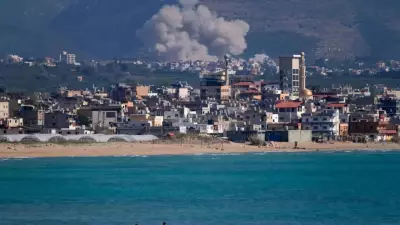
Oil prices have climbed sharply following ongoing conflict involving Iran, pushing up the cost of gasoline, diesel, and jet fuel. The disruption has raised concerns about a potential return of stagflation, similar to the economic turmoil witnessed in the 1970s. The scale of the current disruption is significant. Following attacks by the United States and Israel that began on February 28, Iran effectively shut off the Strait of Hormuz, a critical chokepoint through which about 20 million barrels of oil—roughly one-fifth of global supply—flowed daily.
According to Lutz Kilian, director of the Federal Reserve Bank of Dallas’ Center for Energy and the Economy, while about 5 million barrels per day can be rerouted or continue to flow, nearly 15 million barrels—or about 15% of global output—remains disrupted. This is substantially higher than the roughly 6% disruption seen during the 1973 oil embargo and the 1990 Gulf crisis.

Structural Changes Mitigating Economic Impact
Despite the scale of the disruption, the economic impact has been more contained. Analysts attribute this to profound structural changes in global energy consumption. Oil accounted for nearly 46% of global energy supply in 1973, but that share has declined to about 30% by 2023, according to the International Energy Agency. At the same time, the global energy mix has diversified significantly, with greater reliance on natural gas, nuclear power, and renewables. Although total oil consumption has increased to over 100 million barrels per day from less than 60 million in 1973, economies are now less dependent on oil as a single source of energy.
United States: Reduced Vulnerability Through Domestic Production
The United States, in particular, has reduced its vulnerability. During the 1970s, declining domestic production and rising imports made the country highly exposed to external shocks. The rise of hydraulic fracturing in the 21st century reversed that trend, boosting oil output from about 5 million barrels per day in 2008 to 13.6 million barrels last year and turning the US into a net petroleum exporter by 2019.
“The U.S. economy is much better positioned than it was in the 1970s,” when it was “particularly vulnerable to an oil price shock,” said Sam Ori, executive director of the University of Chicago’s Energy Policy Institute.
Policy Interventions and Efficiency Measures
Energy use patterns have also evolved. In the early 1970s, around 20% of US electricity generation depended on oil. Following policy interventions, including a 1978 law restricting petroleum use in power generation, oil now plays virtually no role in electricity production. Governments across the world introduced efficiency measures after the 1970s shocks. Fuel economy standards, first implemented in the US in 1975, have significantly improved vehicle efficiency, with average mileage rising from 13.1 miles per gallon in 1975 to 27.1 mpg in 2023, according to the Environmental Protection Agency. Similar policies globally have reduced oil intensity in economic activity.

Diversification and Coordinated Responses
Countries also diversified supply sources by developing new oil fields outside the Middle East, including Alaska’s Prudhoe Bay, the North Sea, and Canada’s oil sands. In parallel, they built strategic reserves and created institutional mechanisms such as the International Energy Agency in 1975 to coordinate responses to supply disruptions. More recently, coordinated action has continued. The IEA’s member countries agreed last month to release 400 million barrels of oil from strategic reserves, including 172 million barrels from the US Strategic Petroleum Reserve, to stabilize markets.
Central Banks and Monetary Policy Adaptations
Central banks have adapted their response frameworks as well. During the 1970s, monetary authorities often cut interest rates to support growth, which ended up fueling inflation further. Policymakers are now more cautious. In a commentary before the current conflict escalated, Kilian noted that easing monetary policy during oil shocks can risk reigniting inflation, highlighting a key lesson from the past.
Persistent Vulnerabilities and Future Risks
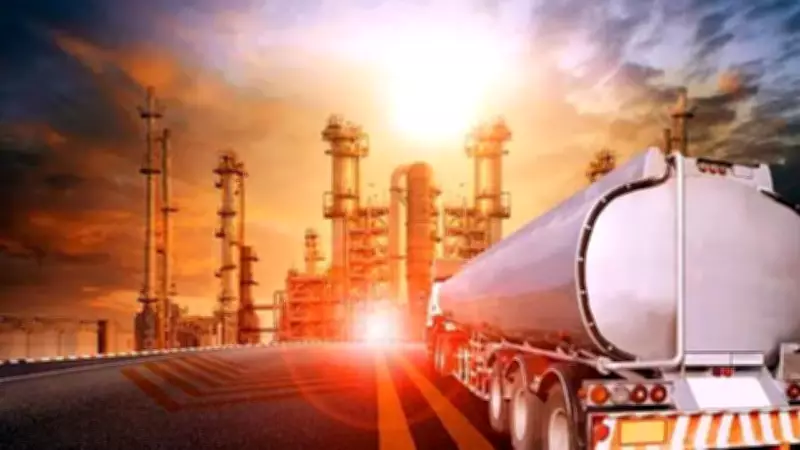
Despite these improvements, vulnerabilities remain. Oil continues to dominate transportation, accounting for about 90% of energy used by cars, trucks, ships, and planes. “Oil is still king, the No. 1 fuel in the U.S. economy,” Ori said. “The lifeblood of the economy—the transportation sector—is still overwhelmingly reliant on petroleum fuel, the price of which is set in a global market, and a disruption anywhere affects the price everywhere.”
He also cautioned that recent policy shifts could increase exposure. Measures under President Donald Trump, including rolling back incentives for electric vehicles and weakening fuel economy standards, may slow the transition away from oil dependence. “You take all that together, and the fact is, the U.S. is going in the opposite direction of making big changes to further insulate the economy from oil shocks and oil price volatility,” Ori added.
Expert Insights and Conclusion
While the current crisis has not triggered the kind of shortages seen in the 1970s—such as long lines at petrol stations or fuel rationing—experts warn that the global economy remains exposed to energy market disruptions. As Amy Myers Jaffe of New York University’s Center for Global Affairs put it: “We have decades of experience now dealing with these kinds of oil shocks.” This experience, combined with structural adaptations, provides a buffer, but ongoing vigilance and policy coherence are essential to navigate future volatility in the global energy landscape.