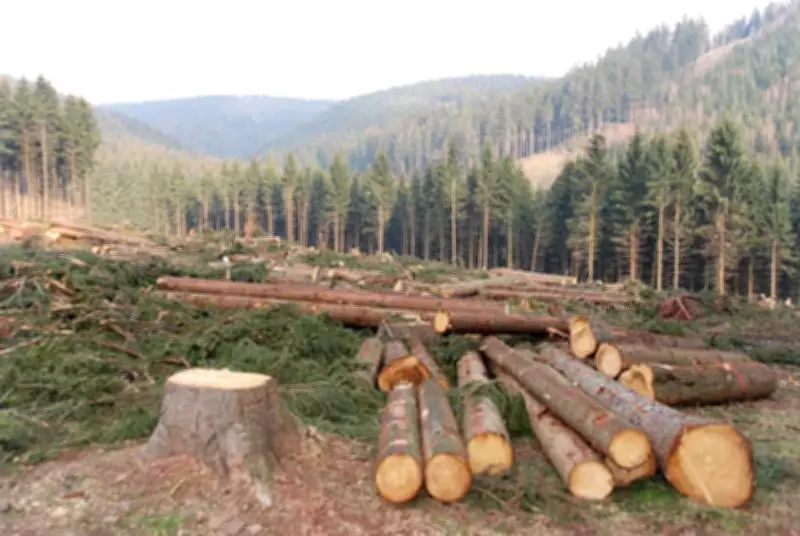
A recent study has underscored the severe economic implications of biodiversity loss and deforestation, which are increasingly recognized as systemic risks to sovereign debt and financial markets. The research indicates that a partial ecosystem collapse could lead to a significant rise in annual debt servicing costs, with India facing an increase of US$ 49 billion and China US$ 70 billion.
Economic Exposure and Interest Payments
The study highlights that China and India are the most economically exposed, with additional annual interest payments equivalent to 2.4 percent of the median Indian's disposable income each year. Across the 23 countries surveyed, the additional annual interest payment totals US$ 162 billion, a substantial amount concentrated in a small number of nations.
Nature Loss and Financial Risks
With at least half of global GDP moderately or highly dependent on nature, evidence mounts that environmental-economic risks extend beyond climate change to include biodiversity loss, deforestation, and water stress. The study, conducted by six researchers from the UK, US, and Germany, was published in Nature Ecology and Evolution on June 5.

The researchers emphasize that the near-term human, economic, and financial toll of nature loss is substantial. Deforestation and species loss alone increase the likelihood of pandemics like COVID-19. Estimates indicate that partial collapses in just three ecosystem services—wild pollination, marine fisheries, and tropical timber—could reduce global GDP by US$ 2 trillion annually by 2030.
Policy and Financial Action Lagging
Despite these risks, action on biodiversity policy and finance has lagged behind climate efforts. Macroeconomic studies on biodiversity often focus on global assessments of natural capital and ecosystem services rather than quantifying risks to financial assets. The researchers warn that continued destruction of natural capital could yield catastrophic financial risks worldwide.
As natural capital declines, credit ratings that ignore nature-related risks may obscure financially material vulnerabilities. The researchers stress that governments, central banks, financial regulators, and international institutions like the World Bank and IMF cannot afford to ignore nature-related financial risk. Credit rating agencies should explicitly include these risks in their methodologies, as the risk of biodiversity loss can be precisely quantified and geographically localized.
Opportunity Costs and Investment Choices
Globally, over 3.3 billion people live in countries that spend more on interest payments than on education or health. The researchers note that if countries put scarce resources into paying interest, they forgo critical investments in ecosystem services, water, or nature-based protection. Ultimately, economies face a choice: pay now by investing in nature, or pay later through reduced fiscal space, higher borrowing costs, and increased interest payments that crowd out growth-enhancing investments.