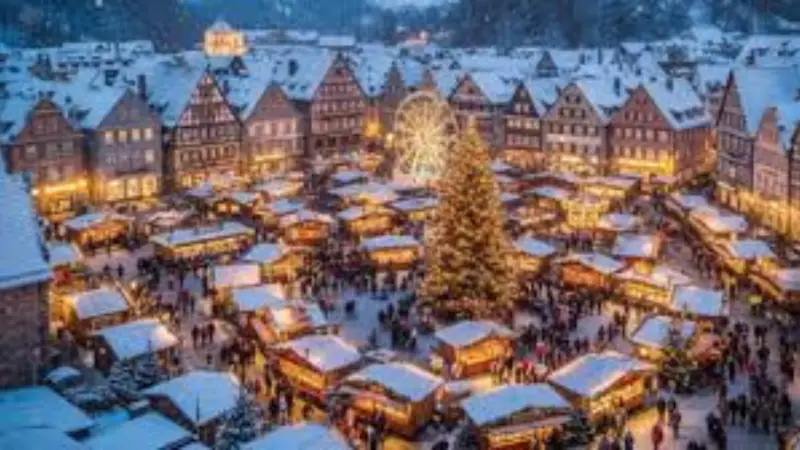
For generations, the majestic Christmas tree stood as the undisputed centrepiece of the annual Christmas market in Augsburg, a historic city in southern Germany. This year, however, a new and unlikely contender has captured public fascination: heavy, removable security bollards installed to protect the festive crowds.
From Festive Tree to Security Posts: A Shift in Focus
The carefree atmosphere that once defined Germany's roughly 3,200 Christmas markets has been noticeably tempered. National security concerns for these popular gatherings have been acute since the devastating 2016 Berlin attack, where a stolen truck was driven into a market crowd. In response, cities across the country began encircling markets with protective barriers.
The urgency for even stricter measures intensified after another tragic incident in December 2022 in Magdeburg, eastern Germany. There, an attacker exploited a critical flaw, driving a rented SUV through a narrow gap left in barriers for emergency vehicles. The assault resulted in six fatalities and injured hundreds, exposing the vulnerability of previous security setups.

Augsburg's Unique and Unwieldy Solution
To address this vulnerability, authorities in various German cities have now blocked such gaps using police vans, metal gates, and concrete blocks. Augsburg faced a unique challenge because its protected market area is crossed by tram lines. The city's innovative, if cumbersome, solution was to install three massive, 770-pound (approximately 350 kg) removable security bollards.
These bollards must be manually lowered and raised using a hand-cranked crane each time a tram needs to pass—a process that occurs roughly once a minute during rush hour. This constant operation has turned a mundane security feature into a peculiar spectator sport. On a recent December afternoon, bystanders filmed municipal workers with their phones, captivated by the procedure.
"These things are terrible," remarked Hannelore Hendrick, 67, a local who refrained from recording. "They remind me of the dangers of being here." Her sentiment reflects the underlying tension. Despite the inconvenience, the mechanism has gained national attention, even featuring on a popular German comedy show, which questioned whether the city was overdoing its security measures.
Public Sentiment and the Cost of Safety
A national poll conducted in November revealed that 62% of respondents were somewhat worried about potential attacks on Christmas markets, while 35% expressed no concern. The financial investment in this peace of mind is significant. Augsburg's Mayor, Eva Weber, stated the city is spending approximately €50,000 to secure its Christmas market this year.
Interestingly, some market vendors report a silver lining. The unusual security setup itself may be drawing crowds. "We are definitely getting more people than last year — and it’s not just Germans but people coming from abroad too," observed Sina Hefele, 21, who sells ornaments at one of the stalls. What began as a practical response to threat has, ironically, become an attraction, symbolising a new era where safety protocols are inextricably woven into the fabric of traditional public celebration.