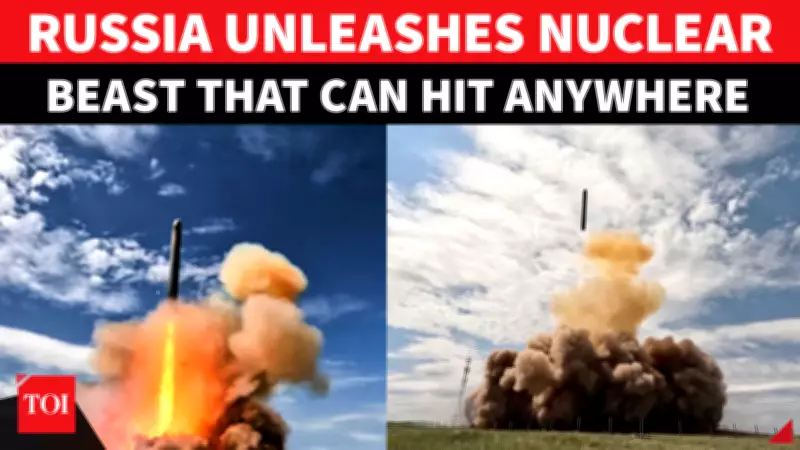
Russia has released footage of a successful test launch of the RS-28 Sarmat intercontinental ballistic missile (ICBM), the most powerful ever built. The missile, weighing 200 tons and nicknamed 'Satan II', is capable of reaching speeds of up to 35,000 km/h. Russian President Vladimir Putin oversaw the launch, marking a significant escalation in the global nuclear arms race.
Unprecedented Capabilities
The RS-28 Sarmat is not just about raw power; its trajectory is equally concerning. By utilizing suborbital flight, the missile can approach targets from the South Pole, a direction that Western missile defense systems are not designed to monitor. This capability renders existing missile shields ineffective and allows Russia to strike targets in Europe and the United States from unexpected angles.
Combat Duty and Global Implications
According to Russian officials, the Sarmat is expected to enter combat duty by late 2026. This development effectively rewrites the global strike map, as the missile's range and flight path give Russia a strategic advantage. The test launch comes amid heightened tensions between Russia and Western nations, further complicating international security dynamics.

The missile's ability to evade detection and interception has been a key focus of its development. Unlike traditional ICBMs that follow a predictable trajectory over the North Pole, the Sarmat's suborbital path allows it to approach from the south, catching adversaries off guard. This adds a new layer of complexity to global defense strategies.
The RS-28 Sarmat is designed to carry multiple warheads, including hypersonic glide vehicles, making it a formidable weapon in Russia's arsenal. Its deployment is expected to trigger a new phase in the nuclear arms race, with other nations likely accelerating their own missile development programs in response.
Analysts have expressed concern over the destabilizing potential of the Sarmat. The missile's ability to bypass current defense systems could lead to a shift in military doctrine and provoke an arms race in missile technology. The test launch has drawn condemnation from Western leaders, who view it as a provocative move that undermines global security.
Despite international criticism, Russia maintains that the Sarmat is a necessary component of its national defense strategy. The missile is intended to ensure Russia's strategic deterrence capabilities for decades to come. As the world watches, the successful test of the RS-28 Sarmat marks a new chapter in the history of nuclear weapons.