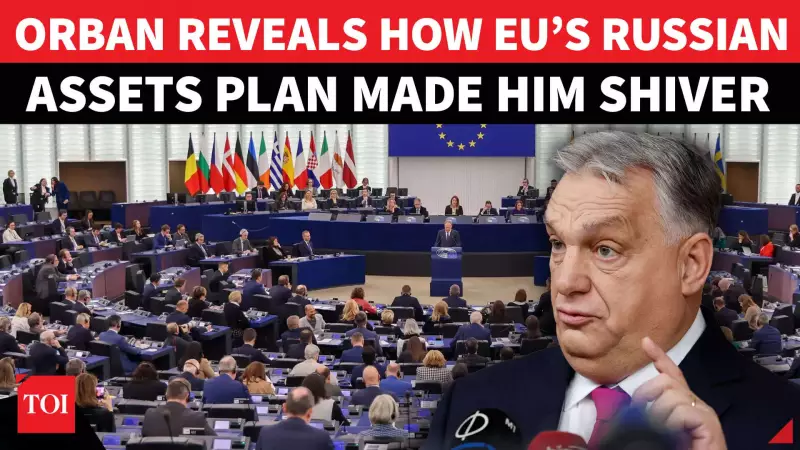
In a fiery outburst that has sent shockwaves through European corridors of power, Hungarian Prime Minister Viktor Orban has accused the European Union of propagating a "lie" regarding the financial burdens of the Ukraine conflict. The controversy erupted following tense talks in Brussels where EU leaders failed to reach a consensus on a critical proposal.
Orban's Explosive Claim: A War Threat Averted?
The Hungarian leader made the stunning claim that an "immediate war threat was averted" during the recent summit. This dramatic statement came after the bloc's leaders could not agree on a plan to seize frozen Russian state assets and redirect them to fund Ukraine's war effort. Orban positioned this deadlock as a victory for restraint, suggesting more aggressive actions could have escalated the conflict dangerously.
However, the Prime Minister's relief was short-lived. He swiftly turned his criticism towards an alternative financial package that did pass. The EU approved a substantial €90 billion loan package for Ukraine, designed to be disbursed over the coming two years. It is this decision that became the focal point of Orban's wrath and his most serious allegations.

The €90 Billion "War Loan" and Mounting Legal Fears
Orban did not mince words in condemning the approved loan. He framed it not as aid for reconstruction or defence, but as a direct enabler of continued hostilities. The Hungarian leader accused the European Union of actively pursuing "war intentions" by funnelling such a massive amount of money into a active war zone.
His warnings were echoed by concerns from other quarters, notably Belgium. Together, Hungary and Belgium raised red flags about several critical risks associated with the loan:
- Legal Perils: Potential lawsuits from Russia, challenging the EU's financial mechanisms.
- Investor Confidence: Fears that such moves could destabilise European financial markets and scare away investors.
- Long-term Liability: The burden of the loan ultimately falling on European taxpayers.
Orban's core argument was stark: by approving this loan, the EU is not using Russian money to pay for the war, but is instead committing the funds of its own citizens. "Taxpayers will have to pay Putin," he asserted, framing the decision as a massive financial transfer from European pockets to Moscow, albeit indirectly through prolonged conflict.
Broader Implications and a Divided Europe
This episode highlights the deep and persistent fractures within the European Union regarding its strategy towards Ukraine. Orban, maintaining closer ties with Moscow than any other EU leader, has consistently positioned himself as a voice against the bloc's consensus on military and financial support for Kyiv.
His latest comments are likely to fuel further debate about the sustainability and goals of EU support. The failure to agree on seizing Russian assets underscores the legal and ethical minefield the bloc navigates. Meanwhile, the decision to proceed with a giant loan reveals a determination to support Ukraine despite internal dissent and significant financial and legal risks.
The aftermath of the Brussels talks leaves a critical question hanging over Europe: Is the union, as Orban claims, drifting towards a policy that entangles its economies and taxpayers in a long-term war, or is this the necessary price of defending European security and values? The answer continues to divide the continent.