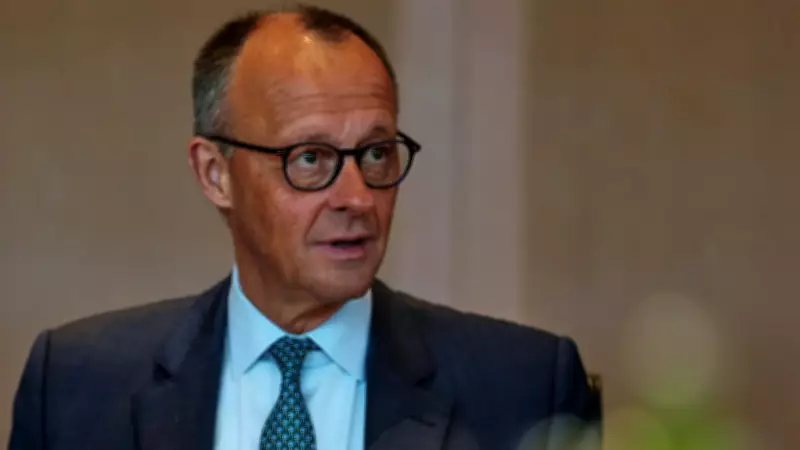
German Chancellor Friedrich Merz on Friday said he would advise his children against living or studying in the United States at the moment, citing a rapidly changing social climate and limited opportunities even for the highly educated.
Merz's Remarks on US Social Climate
Speaking to a young audience at a Catholic convention in Wuerzburg, Merz expressed concerns about the social environment in the US. He stated that people were too prone to think in “disaster mode” about the state of the world and urged Germans to feel more optimistic about their own country’s potential.
“I firmly believe that there are few countries in the world that offer such great opportunities, especially for young people, as Germany,” he said. “I wouldn’t recommend that my children go to the US today, get their education there, and work there, simply because a social climate has suddenly developed there,” added Merz, a 70-year-old father of three. He further noted that “today, the best-educated people in America have great difficulty finding a job.”

Tensions Between US and European Allies
The remarks highlight tensions between the US and its European allies under President Donald Trump. Disputes over trade, the wars in Ukraine and Iran have put the NATO alliance under strain. Merz last month said the US was being humiliated in the Iran war, which angered Trump. Days later, Washington announced a partial troop withdrawal from Germany.
Merz’s comments come amid a broader reassessment of transatlantic relations. The German leader’s advice underscores a growing sentiment among European leaders that the US may no longer be the preferred destination for education and career opportunities. His statements also reflect concerns about the direction of US social and economic policies under the current administration.
Optimism About Germany's Potential
Despite his criticism of the US, Merz emphasized optimism about Germany’s future. He encouraged young Germans to recognize the opportunities available in their own country, particularly in terms of education and employment. His remarks were part of a broader message urging Germans to avoid a “disaster mode” mindset and to focus on the strengths of their nation.
The chancellor’s advice has sparked debate in Germany and abroad, with some supporting his view and others criticizing it as overly pessimistic about the US. However, Merz’s comments are likely to further strain US-German relations, already tense due to policy differences on trade, defense, and international conflicts.