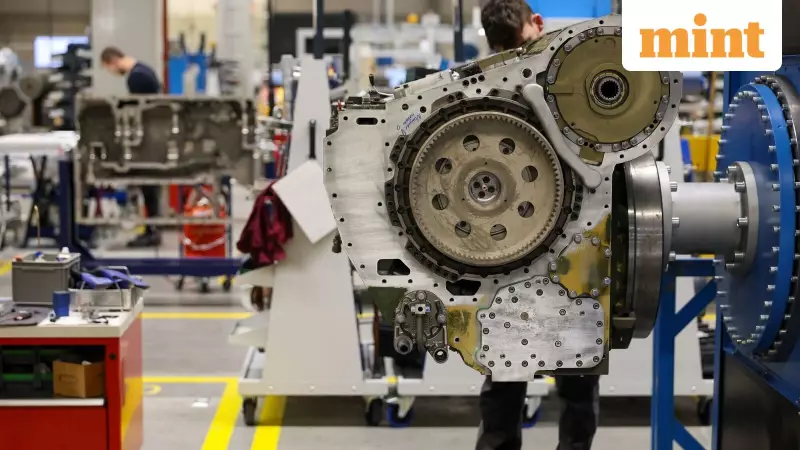
Across Germany, a profound industrial transformation is underway. Railcar factories are being retooled to build military vehicles, automotive suppliers are forging alliances with defence contractors, and former soldiers have become sought-after recruits. This strategic pivot comes as the nation's government commits to spending more than half a trillion dollars on defence over the next decade, offering a lifeline to manufacturers grappling with high costs, falling exports, and economic stagnation.
From Civilian to Combat: An Industrial Reinvention
The shift is both widespread and strategic. Membership in Germany's primary defence sector trade body has nearly doubled in the past year, with a significant influx from civilian industries, notably automotive. This is not a minor trend but a fundamental reorientation of Europe's largest economy.
Companies are leveraging their core expertise for new military applications. Heidelberger Druckmaschinen, a traditional printing machine maker based in Heidelberg, is repurposing hundreds of engineers as demand for its classic products wanes. The company plans to establish a defence business focused on autonomous ground vehicles and energy systems, targeting around €100 million in annual revenue. "We don't need to hire…we can do it all with the people on hand here," said executive Michael Wellenzohn.

Similarly, Hamburg-based goodBytz, which started in 2021 making automated 'ghost kitchens', is now supplying autonomous robotic kitchens to the U.S. Army in South Korea and is in talks with major NATO countries. CEO Hendrik Susemihl expects defence to eventually account for one-third of his company's revenue.
A Defence-Led Economic Stimulus
The catalyst for this shift is monumental. Amid rising geopolitical tensions with Russia and a complex relationship with China and the U.S., Germany plans to nearly triple its annual military spending to around $180 billion by 2029. This spending splurge is already visible in economic data. Industrial production for October showed significant gains in defence-geared sectors, helping offset declines in traditional mainstays like vehicles and chemicals, according to Holger Schmieding, chief economist at Berenberg Bank.
For a manufacturing sector that has shrunk for seven consecutive years, squeezed by high energy prices and fierce global competition, this government-backed demand is a godsend. Economists like Guntram Wolff of Université Libre de Bruxelles hope the capital will boost research and development, potentially seeding future startups and exports, mirroring the historical role of U.S. defence spending in creating Silicon Valley.
The new demand is also creating jobs. Recruiter Martin Bergerhausen in Hamburg noted salaries for defence project managers with artillery experience range from €90,000 to €120,000, comparable to the auto industry. This helps counterbalance the approximately 112,000 job losses in Germany's auto sector since 2019.
Challenges and a Return to Historical Roots
Despite the optimism, the shift carries inherent risks and limitations. Economists caution that defence exports face natural constraints—China is off-limits, and the U.S. maintains a 'buy-American' strategy. Furthermore, productivity growth in parts of the sector is weak, and military investments are often less productive for the wider economy than spending on infrastructure, as weapons are stored or destroyed rather than used in continuous economic activity.
The scale of the defence boom is also unlikely to fully replace the shrinking auto industry. An estimated 120,000 people work in defence-related fields, compared to around 800,000 in the car industry, notes Klaus-Heiner Roehl of the German Economic Institute.
Sociologically, this represents a significant change for a nation with a strong post-World War II pacifist tradition. However, sociologist Timo Graf from the Center for Military History and Social Sciences of the Bundeswehr states that most Germans now support higher military spending, despite some concerns about making the country a target.

Historically, this pivot is a return to form. German industrialisation in the 19th century was closely tied to arms manufacturing, with giants like Krupp fuelling military power for decades. After being dismantled post-WWII and slowly rebuilt during the Cold War, Germany's defence industry shrivelled in the 1990s as spending shifted to the welfare state. "Germany is in a sense returning to old form," observes Graf.
The transition is being accelerated by major industrial partnerships. Automotive supplier Schaeffler has teamed up with defence startup Helsing to scale drone production to 10,000-20,000 units annually, with surge capacity for 100,000. Engineering group Trumpf is applying its laser expertise to build drone defence systems. Even transmission specialist Renk is increasing its focus on defence, aiming to shrink its civil business share from 26% to 10% by 2030.
This strategic industrial shift, driven by geopolitics and economic necessity, is reshaping the very fabric of German manufacturing, with implications that will resonate across Europe and the global defence landscape for years to come.