

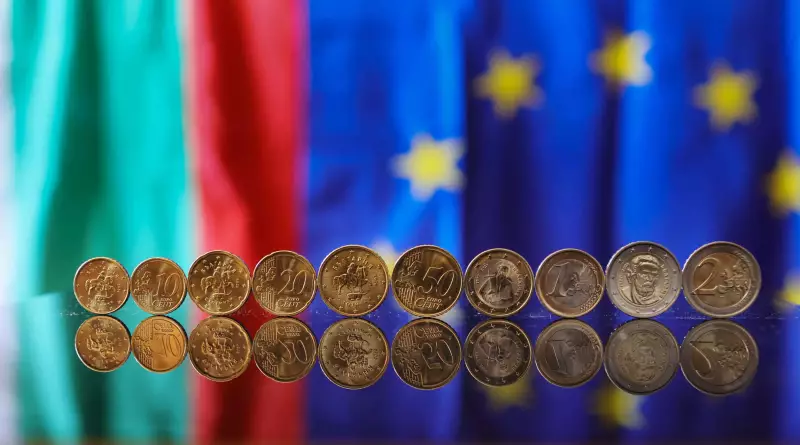
On the stroke of midnight on New Year's Eve, Bulgaria embarked on a historic economic transition, officially adopting the euro and becoming the 21st member of the eurozone. This move marks the end of the Bulgarian lev, a currency with roots stretching back to the 19th century, but it arrives amidst public anxiety over potential price increases and within a climate of deep political uncertainty.
A Milestone Amidst Turbulence
The Balkan nation of 6.4 million people, which joined the European Union in 2007, has long viewed euro membership as a strategic goal. Successive governments have argued that adopting the single currency will strengthen Bulgaria's economy—the poorest in the EU—anchor it more firmly to the West, and provide a buffer against external influences, notably from Russia. Outgoing Prime Minister Rossen Jeliazkov framed the switch as a crowning achievement for his caretaker government, pointing to a robust economic backdrop.
"Bulgaria is ending the year with a gross domestic product of 113 billion euros and economic growth of more than three percent, which places us among the top five countries in the EU," Jeliazkov stated ahead of a cabinet meeting. He attributed the country's current inflation rate of approximately 3.6% to increased purchasing power and a less corrupt economy, explicitly denying any link to the imminent euro introduction.

Public Cheers and Widespread Fears
Despite official optimism, a significant portion of the Bulgarian public remains apprehensive. Fears that the currency changeover will trigger a wave of price hikes have been widespread. These concerns were amplified by a protest movement this year campaigning to "keep the Bulgarian lev," which resonated with a generally sceptical view of the euro.
Data from the National Statistical Institute showed food prices in Bulgaria rose by five percent year-on-year in November, more than double the eurozone average. Many Bulgarians believe the transition has already begun affecting their wallets. "Unfortunately, prices no longer correspond to those in levs (...) 40 levs is not 20 but 30 euros for certain products," lamented 33-year-old pastry shop owner Turgut Ismail in comments to AFP.
Practical challenges have also emerged in the lead-up to the switch. Business owners reported difficulties obtaining euro cash, with some shopkeepers complaining they had not received the starter kits of euro coins and notes they ordered. Banks warned of possible disruptions to card payments and ATM withdrawals during the transition. On Tuesday, long queues formed outside the Bulgarian National Bank and exchange offices in Sofia as people rushed to get their hands on the new currency.
Political Risks and Long-Term Hopes
The euro adoption occurs at a politically fragile moment for Bulgaria. The country has been rocked by anti-corruption protests that recently toppled a conservative-led government, pushing it toward its eighth general election in just five years. Analysts warn that any teething problems with the euro could be exploited by anti-EU political forces.
Boryana Dimitrova of the Alpha Research polling institute noted that with political instability shaking the country, any issues with euro adoption would be seized upon by eurosceptic politicians. A recent Eurobarometer survey found that 49% of Bulgarians oppose the single currency.
Yet, some business owners express cautious optimism. Elena Shemtova, 37, who runs a small gallery and jewellery shop in central Sofia, told AFP, "We will experience difficulties at first, there will be problems with giving change, but within a month we will have gotten used to it."
Prime Minister Jeliazkov appealed for public patience, stating, "There will be challenges, but we are counting on the tolerance and understanding of both citizens and businesses." He emphasised that the government believes introducing the euro will have "a positive long-term effect on the Bulgarian economy and on the environment in which the country is developing."
With Bulgaria's accession, the number of Europeans using the euro now exceeds 350 million. The euro was first introduced in 12 countries on January 1, 2002, with Croatia being the most recent member to join in January 2023.






