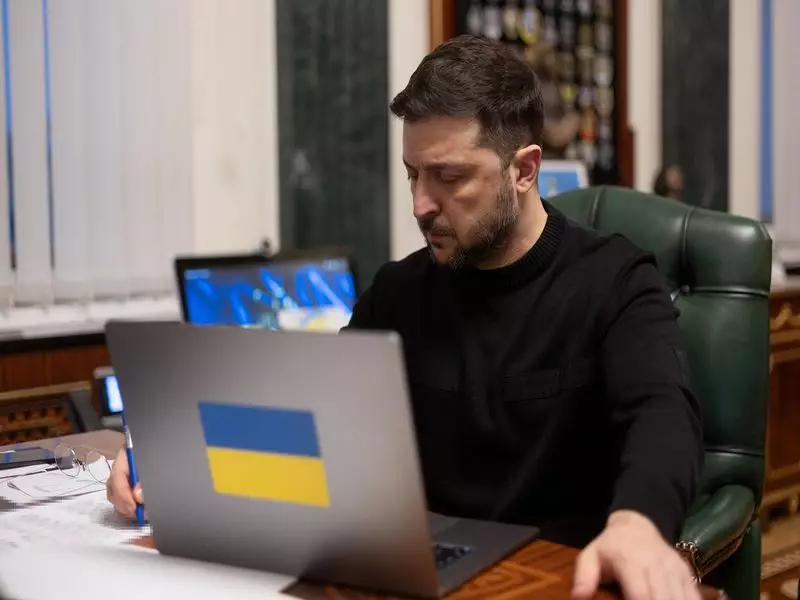
In a stark dismissal of past diplomatic assurances, Ukrainian President Volodymyr Zelenskyy has labelled the 1994 Budapest Memorandum a mere "piece of paper." His comments came as he passionately argued for a new, robust, and lasting peace agreement to finally end the devastating war with Russia.
The Broken Promise of Budapest
President Zelenskyy's critique centres on the historic Budapest Memorandum, signed on December 5, 1994. In that agreement, Ukraine voluntarily gave up its vast nuclear arsenal, the third-largest in the world at the time. In return, the signatory powers—Russia, the United States, and the United Kingdom—provided security assurances, promising to respect Ukraine's sovereignty and existing borders.
However, Russia's full-scale invasion in February 2022 rendered those assurances meaningless. "It turned out to be a piece of paper," Zelenskyy stated bluntly, highlighting the failure of the pact to prevent aggression. He emphasised that Ukraine had fulfilled its side of the bargain by denuclearising, but the promised security never materialised, leaving the nation vulnerable.

A Call for a New and Just Peace
Moving beyond the failed past, the Ukrainian leader is now focused on forging a future peace deal. He insists that any new agreement must be "just, durable, and effective." For Zelenskyy, a just peace is non-negotiable and cannot be achieved through what he terms "phony compromises" that would only allow the conflict to simmer and reignite later.
His vision for durability involves clear, legally binding security guarantees from powerful allies. The goal is to create a framework so strong that it would deter any future aggressor for decades, ensuring long-term stability for Ukraine and the broader European region.
The Path Forward and Global Stakes
The Ukrainian President's appeal underscores a critical shift in post-Cold War security thinking. The episode demonstrates that informal security assurances are insufficient against determined expansionism. Zelenskyy's stance signals that Ukraine will likely seek ironclad, formal defence pacts, possibly akin to NATO's Article 5, as part of any postwar settlement.
This situation presents a profound challenge to the international community, particularly to nations like India that value diplomatic pacts and strategic stability. The crumbling of the Budapest Memorandum raises questions about the credibility of similar security guarantees and the mechanisms needed to uphold them in a fracturing world order.
As the war continues, Zelenskyy's message is clear: the world must learn from the failure of the Budapest Memorandum. The future peace for Ukraine must be built not on hopeful pieces of paper, but on solid, enforceable commitments that guarantee sovereignty and deter future conflict.