

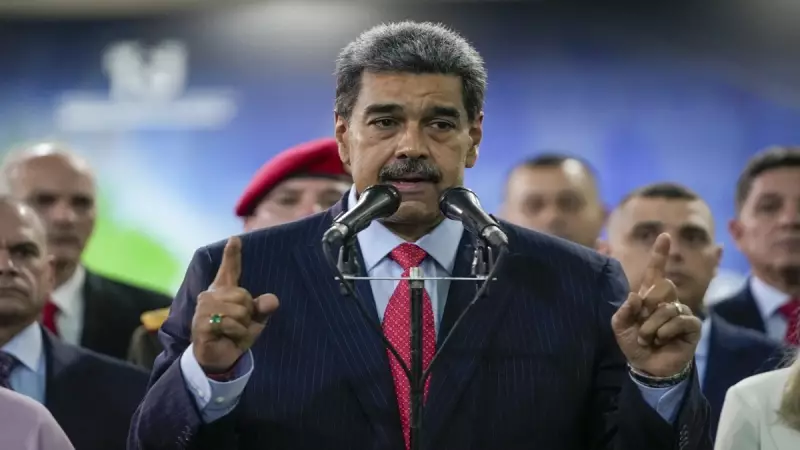
The geopolitical tinderbox in Latin America is sparking with renewed intensity as a bitter feud between Venezuela and the United States escalates, raising alarms of a potential direct confrontation. The conflict, rooted in decades of ideological opposition, has been supercharged by recent developments involving oil, alleged drug trafficking, and border infiltrators, creating what experts describe as a 'powder keg' situation.
The Core Flashpoints: Oil, Territory, and Alleged Infiltration
At the heart of the current crisis are several volatile issues. First is Venezuela's longstanding claim over the oil-rich Essequibo region of Guyana, a dispute that flared dramatically in late 2023. The Maduro government held a controversial referendum and subsequently announced plans to annex the territory, mobilizing military forces near the border. This move triggered immediate concern from the US, which conducted joint military exercises with Guyana in a clear show of support for the smaller nation.
Second is the persistent US accusation that the Maduro regime is a narco-state, involved in trafficking drugs to the United States and Europe. Washington has indicted Maduro and several of his top officials on narcoterrorism charges, offering a massive $15 million reward for information leading to his capture. Caracas vehemently denies these allegations, labeling them a pretext for intervention.

The third flashpoint, and perhaps the most immediate for the US, is the allegation of 'infiltrators'. US officials claim that individuals with ties to Venezuelan intelligence and organized crime are entering the United States through its southern border, posing national security threats. This has directly linked the Venezuela crisis to the heated domestic US politics of immigration and border security.
Global Alliances: Who Would Support Maduro in a War?
If the standoff were to erupt into open conflict, the question of international alliances becomes critical. Analysts suggest that while Venezuela under Maduro is largely isolated from the West, it does have powerful, though potentially cautious, backers.
Russia stands as Venezuela's most significant strategic partner. The relationship is deep, encompassing military, economic, and diplomatic support. Russia has provided arms, military advisors, and key diplomatic cover at the United Nations. In a conflict, Russia would likely supply intelligence, weapons, and political support, though a direct military deployment similar to Ukraine is considered less probable due to logistical challenges.
China is Venezuela's largest creditor and has billions of dollars in oil-for-loan agreements at stake. Beijing's primary interest is stability and protecting its economic investments. While China would likely provide strong diplomatic and economic backing to Caracas, including possibly blocking UN actions, direct military involvement is not in its current playbook. Its support would be crucial for keeping the Venezuelan economy afloat under sanctions.
Iran shares a bond of antagonism with the US and has cooperated with Venezuela on oil refining and technical exchanges. Support could come in the form of drone technology, oil expertise, and proxy-style solidarity, but its capacity for large-scale intervention is limited.
Other nations like Cuba, Nicaragua, and Bolivia would offer political solidarity, but their material support would be minimal. Crucially, regional powers like Brazil and Colombia have shown reluctance to support any military action, prioritizing regional stability.
The Stakes: Oil, Migration, and a Hemispheric Crisis
The consequences of a war would be catastrophic and far-reaching. Venezuela possesses the world's largest proven oil reserves. A conflict would disrupt global energy markets, spike oil prices, and trigger a new wave of economic instability worldwide.
Regionally, it could unleash a massive humanitarian disaster, dwarfing the current migration crisis. Millions more Venezuelans could flee, overwhelming neighboring countries like Colombia and Brazil and creating a severe challenge for the United States.

For the US, a military intervention would be a costly, complex quagmire, drawing resources and attention away from other global priorities like the Indo-Pacific and Ukraine. It would also deepen anti-American sentiment across Latin America.
Currently, the situation remains in a tense stalemate. The US continues its strategy of maximum economic pressure through sanctions, while Maduro consolidates power domestically and tests boundaries regionally, as seen with Guyana. The presence of Russian warships in the Caribbean in 2024 was a stark reminder of the potential for this regional dispute to draw in major global powers.
The path forward hinges on diplomacy and whether upcoming elections in Venezuela and the United States alter the calculus. For now, the powder keg remains primed, with the world watching to see if a spark ignites a broader fire.





