Venezuela Hit by Back-to-Back Earthquakes
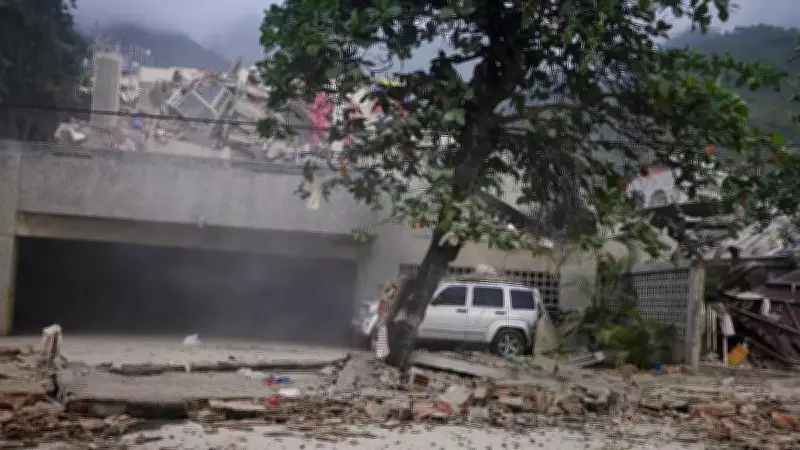
Venezuela experienced two powerful earthquakes in quick succession on Wednesday evening, prompting interim leader Delcy Rodriguez to declare a state of emergency. The quakes caused buildings in the capital, Caracas, to collapse and forced the closure of the country's main airport, according to official reports.
Damage and Response
The first earthquake struck at approximately 6:30 p.m. local time, followed by a second tremor about 20 minutes later. Preliminary assessments indicate that several structures in Caracas sustained significant damage, with some collapsing entirely. The Simon Bolivar International Airport, the nation's primary air hub, was shut down as a precautionary measure to assess runway integrity and ensure passenger safety.
Interim leader Delcy Rodriguez addressed the nation, stating, "We are activating all emergency protocols to assist those affected and to evaluate the full extent of the damage." Rodriguez urged citizens to remain calm and follow instructions from civil defense authorities.

Japan Also Struck by Earthquake
Meanwhile, Japan was hit by a magnitude 6.9 earthquake on the same day. The Japan Meteorological Agency reported that the quake occurred off the coast of Honshu island at a depth of 40 kilometers. No tsunami warning was issued, and no injuries were immediately reported. Authorities also confirmed that no irregularities were found at nuclear facilities in the affected region.
Japanese officials are monitoring the situation closely, but initial reports indicate minimal disruption. The earthquake did not trigger any tsunami alerts, and infrastructure appears to have withstood the tremor without major issues.
Global Context and Preparedness
Both events highlight the seismic activity that frequently affects nations along the Pacific Ring of Fire. Venezuela, while less seismically active than Japan, has experienced occasional earthquakes. The Venezuelan government has deployed search and rescue teams to affected areas and is coordinating with international agencies for potential aid.
In Japan, strict building codes and disaster preparedness measures helped mitigate the impact. The lack of tsunami warnings and nuclear facility irregularities underscores the effectiveness of Japan's monitoring systems.
Authorities in both countries continue to assess the situation and provide updates as more information becomes available.