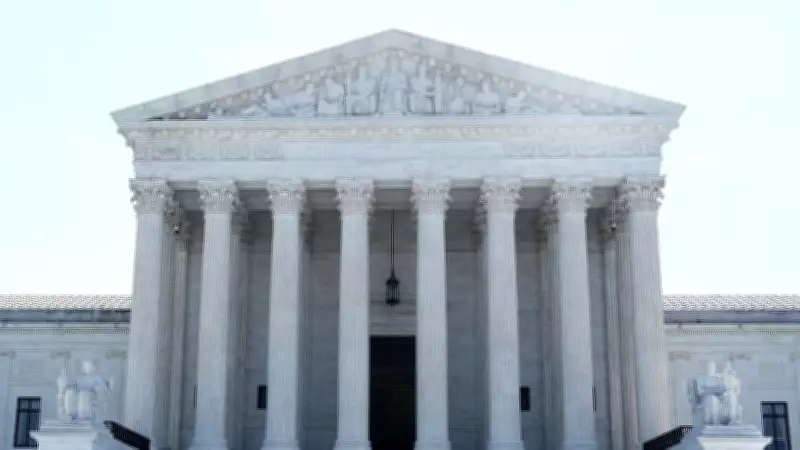
The United States Supreme Court has ruled that states may legally bar transgender athletes from participating in girls’ and women’s sports, a decision that upholds a growing wave of state-level legislation and aligns with executive actions taken by President Donald Trump.
Supreme Court Decision
In a 6-3 ruling on Monday, the justices determined that state laws restricting transgender athletes from competing on female sports teams do not violate the Equal Protection Clause of the 14th Amendment. The majority opinion, written by Justice Samuel Alito, argued that states have a legitimate interest in preserving fair competition and equal opportunity for biological females in athletics.
“The Constitution does not require states to ignore biological differences between the sexes in the context of competitive sports,” Alito wrote. The decision effectively allows states to enforce bans that had been challenged by civil rights groups and transgender advocates.

Background and Presidential Action
The ruling comes after President Donald Trump directed federal agencies last year to withdraw funding from schools that permit transgender athletes to compete in girls’ and women’s sports. That executive order, signed in February 2025, instructed the Department of Education and other agencies to reinterpret Title IX regulations to exclude transgender participation based on biological sex.
According to the White House, over 20 states had already enacted similar bans before the Supreme Court decision. The ruling now provides constitutional cover for those laws and encourages other states to follow suit.
Impact and Reactions
Supporters of the decision, including conservative advocacy groups, hailed it as a victory for fairness in women’s sports. “This ruling protects the integrity of female athletics and ensures that girls have a level playing field,” said Sarah Parshall Perry of the Heritage Foundation.
Opponents, including the American Civil Liberties Union, condemned the ruling as discriminatory. “The court has sanctioned state-sanctioned exclusion of transgender youth from activities that are vital for their development and well-being,” said Chase Strangio, an ACLU attorney.
The decision is expected to affect thousands of transgender student-athletes across the country. According to data from the Williams Institute, an estimated 1.5% of high school students in the U.S. identify as transgender, with a significant number participating in sports.
Legal and Legislative Landscape
The ruling does not mandate that all states adopt bans; rather, it permits states to choose whether to impose such restrictions. At least 12 states have laws explicitly protecting transgender athletes’ participation, and those laws remain in effect unless challenged under the new precedent.
Legal experts anticipate further litigation over the scope of the decision, particularly regarding federal funding conditions and the interpretation of Title IX. The Biden administration had previously issued guidance supporting transgender inclusion, but the Trump administration reversed that stance.
In a statement, President Trump praised the ruling: “The Supreme Court has upheld common sense and the rights of women and girls. We will continue to protect the integrity of American sports.”
Looking Ahead
The decision marks a significant shift in the legal landscape for transgender rights in the United States. Advocacy groups have vowed to push for federal legislation that would override state bans, but such efforts face an uphill battle in the current Congress.
International sports governing bodies, including the International Olympic Committee, have also been grappling with similar policies. The US ruling may influence global debates on transgender athlete participation.